
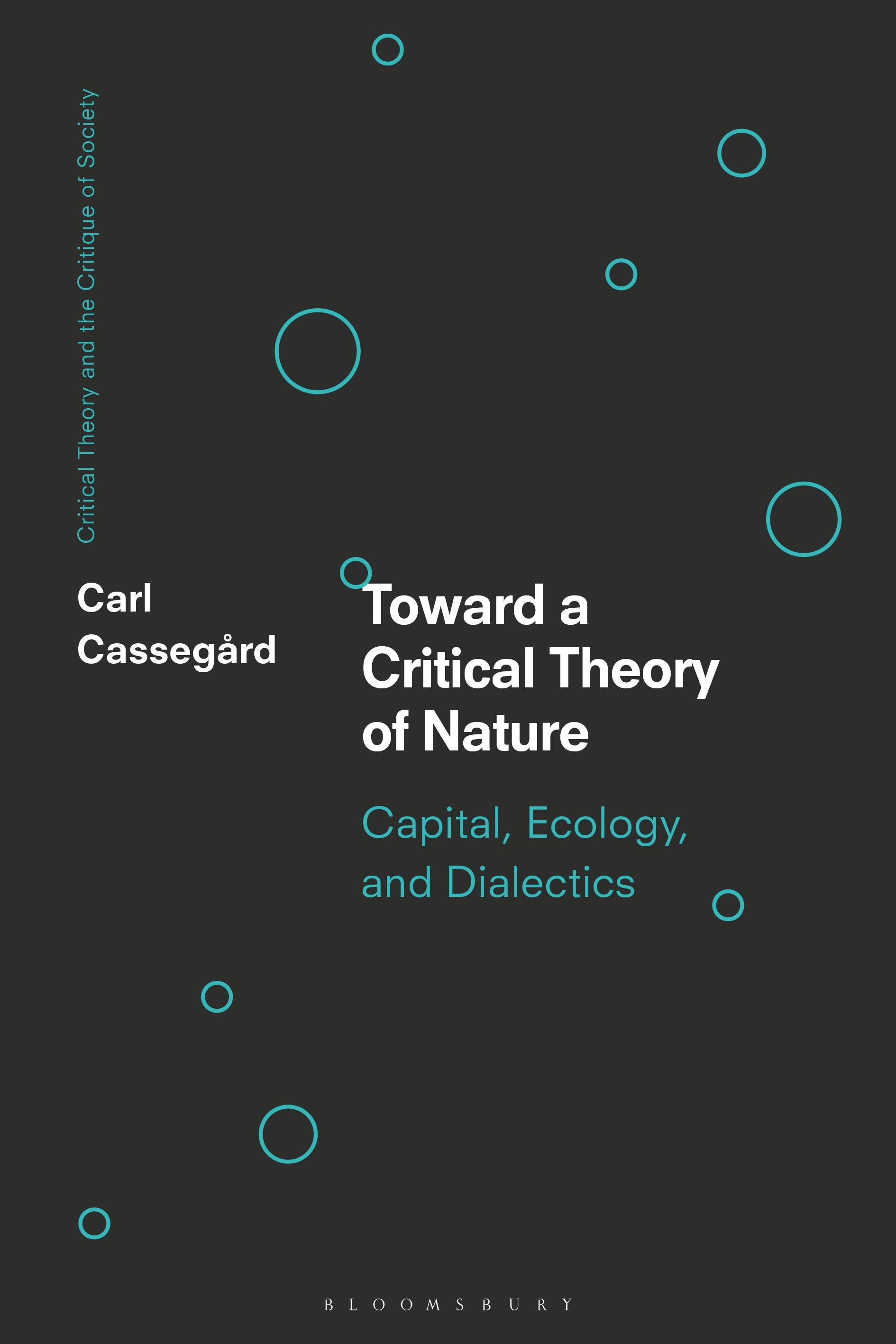
Challenging the normalization of a capitalist reality in which environmental destruction and catastrophe have become 'second nature', Towards a Critical Theory of Nature offers a bold new theoretical understanding of the current crisis via the work of the Frankfurt School. Focusing on key notions of dialectics, natural history, and materialism, a critical theory of nature is outlined in favor of a more traditional Marxist theory of nature, albeit one which still builds on core Marxist concepts to confirm humanity's central place in manufacturing environmental misery. Pre-eminent thinkers of the Frankfurt school, including, Georg Lukács, Ernst Bloch, Theodor Adorno, and Alfred Schmidt, are highlighted for their potential to diagnose the interpenetration of capitalism and nature in a way that neither absolutizes nor obliterates the boundary between the social and natural.
Further theoretical claims and practical consequences of a critical theory of nature challenge other contemporary theoretical approaches like eco-Marxism, social constructivism and new materialism, to situate it as the only approach with genuinely radical potential. The possibility of utopian idealism for understanding and responding to the current climate crisis is carefully measured against the dangers of false hope in setting out realistic goals for change. Environmental change in turn is seen through the prism of recent cultural currents and movements, situating the power of a critical theory of nature in relation to understandings of the Anthropocene; concepts of apocalypse, and postapocalypse. This book culminates in a powerful tool for an anti-capitalist critique of society's painfully extractive relationship to a deceptively abstracted natural world.
Further theoretical claims and practical consequences of a critical theory of nature challenge other contemporary theoretical approaches like eco-Marxism, social constructivism and new materialism, to situate it as the only approach with genuinely radical potential. The possibility of utopian idealism for understanding and responding to the current climate crisis is carefully measured against the dangers of false hope in setting out realistic goals for change. Environmental change in turn is seen through the prism of recent cultural currents and movements, situating the power of a critical theory of nature in relation to understandings of the Anthropocene; concepts of apocalypse, and postapocalypse. This book culminates in a powerful tool for an anti-capitalist critique of society's painfully extractive relationship to a deceptively abstracted natural world.
Payez facilement par carte, Klarna, Apple Pay ou Google Pay. Pas satisfait ? Vous avez toujours une garantie de remboursement de 14 jours. En savoir plus dans nos conditions. Si vous avez des questions, envoyez-nous un e-mail à hello@memmo.org.
Memmo facilite tes études, où que tu sois dans le monde. On rassemble tes manuels de cours et des outils d'étude intelligents au même endroit : résumés, quiz, podcasts et flashcards. Et il y a Ted, ton compagnon d'étude qui répond à toutes tes questions. Plus de 50 000 étudiants étudient déjà ici – conçu pour t'aider à apprendre plus vite et à moins stresser.