
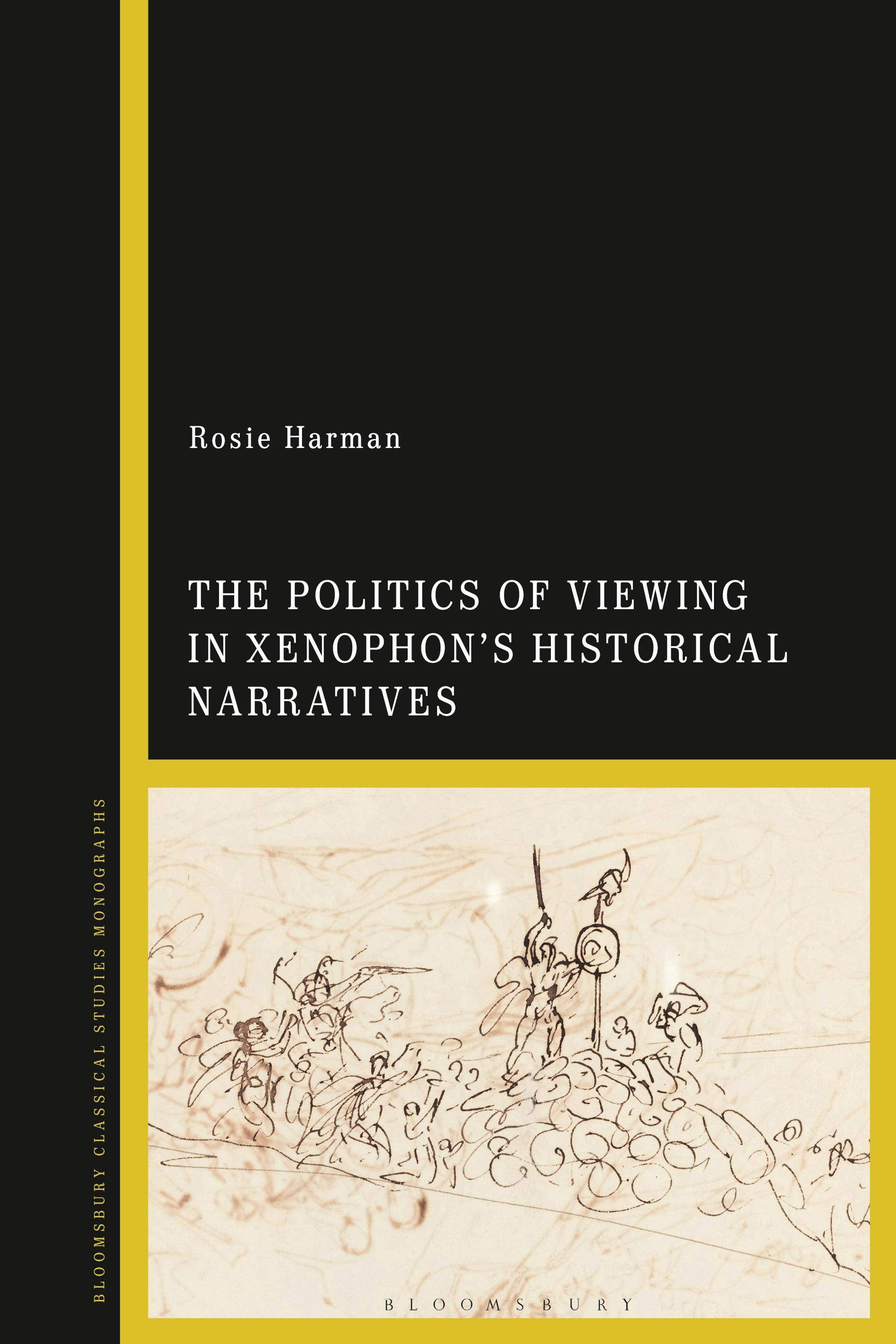
This book considers cultural identity and power relations in early fourth-century BCE Greece through a reading of Xenophon's historical narratives, the Hellenica, Anabasis and Cyropaedia. These texts depict conflicts between Greek states, conflicts between Greeks and non-Greeks, and relations between the elite individual and society. In all three texts, politically significant moments are imagined in visual terms. We witness spectacles of Spartan military victory, vistas of Asian landscape or displays of Persian imperial pomp, and historical protagonists are presented as spectators viewing and responding to events.
Through this visual form of narration, the reader is encouraged imaginatively to place themselves in the position of the historical protagonists. In viewing events from different perspectives, and therefore occupying multiple, often conflicting political positions, the reader not only experiences the problems faced by historical actors, but becomes engaged in the political conflicts acted out in the narratives.
The reader is prompted to take pleasure in the sight of Panhellenic achievement, but also to witness the divisions and conflicts between Greeks on class and ethnic lines. Similarly the reader is invited to identify with spectacular Greek and non-Greek figures of power as emblems of Greek imperial potential, but also to see through the eyes of those communities subjugated at their hands. The depiction of spectacles and spectators draws the reader into an active participation in the ideological contradictions of their time, in a period when Panhellenic aspiration co-existed with hegemonic competition between Greek states, and when Greeks could be both beneficiaries and victims of imperialism.
Through this visual form of narration, the reader is encouraged imaginatively to place themselves in the position of the historical protagonists. In viewing events from different perspectives, and therefore occupying multiple, often conflicting political positions, the reader not only experiences the problems faced by historical actors, but becomes engaged in the political conflicts acted out in the narratives.
The reader is prompted to take pleasure in the sight of Panhellenic achievement, but also to witness the divisions and conflicts between Greeks on class and ethnic lines. Similarly the reader is invited to identify with spectacular Greek and non-Greek figures of power as emblems of Greek imperial potential, but also to see through the eyes of those communities subjugated at their hands. The depiction of spectacles and spectators draws the reader into an active participation in the ideological contradictions of their time, in a period when Panhellenic aspiration co-existed with hegemonic competition between Greek states, and when Greeks could be both beneficiaries and victims of imperialism.
Pages: 240
Catégorie: Arkeologi & Antikvetenskap
e-ISBN: 9781350159044
Poids d'expédition: 1.2 kg
Expédié sous: 1-2 jours
Payez facilement par carte, Klarna, Apple Pay ou Google Pay. Pas satisfait ? Vous avez toujours une garantie de remboursement de 14 jours. En savoir plus dans nos conditions. Si vous avez des questions, envoyez-nous un e-mail à hello@memmo.org.
Memmo facilite tes études, où que tu sois dans le monde. On rassemble tes manuels de cours et des outils d'étude intelligents au même endroit : résumés, quiz, podcasts et flashcards. Et il y a Ted, ton compagnon d'étude qui répond à toutes tes questions. Plus de 50 000 étudiants étudient déjà ici – conçu pour t'aider à apprendre plus vite et à moins stresser.