
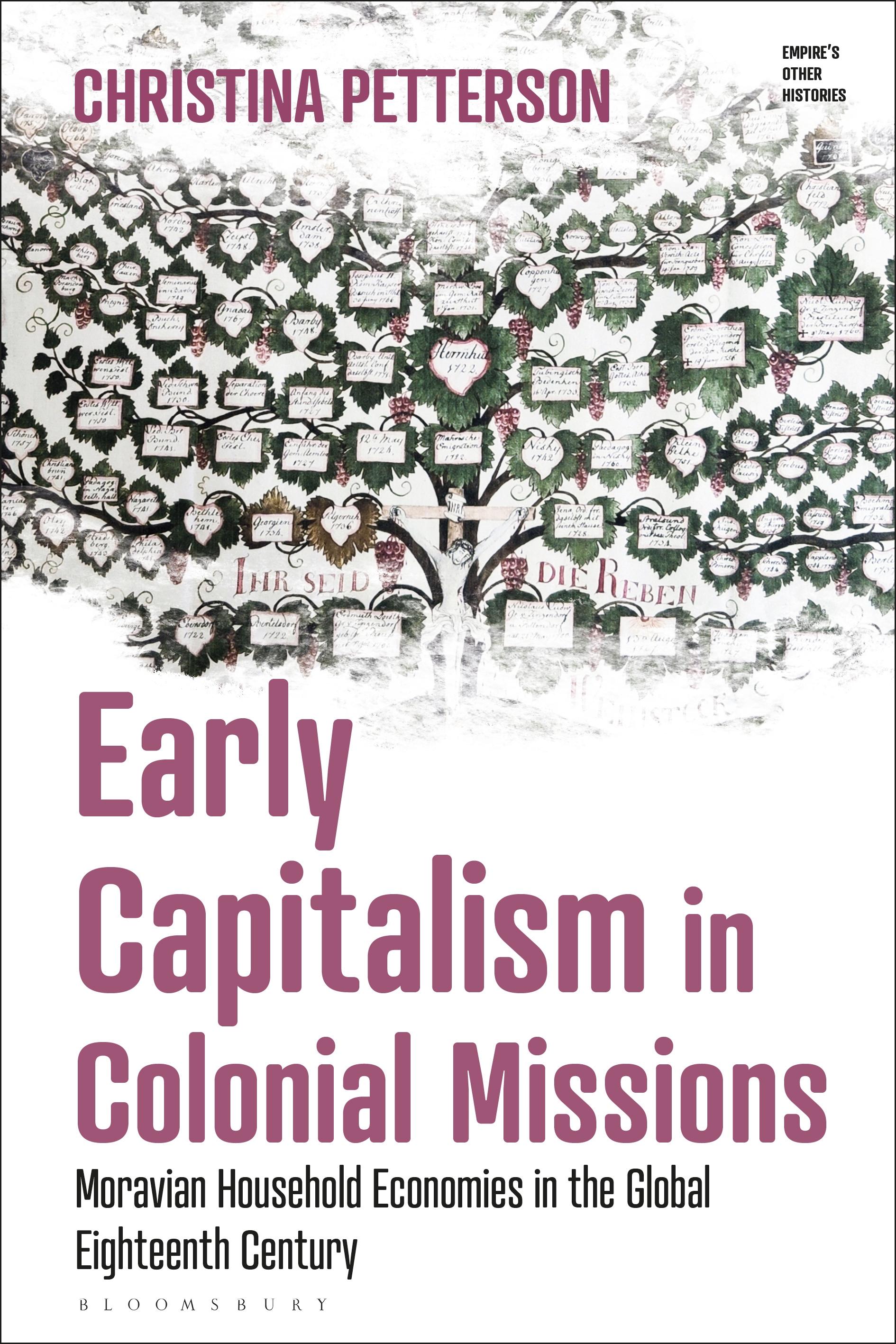
Drawing on unpublished archival material, this volume compares Moravian economic practice in three different mission-settings, to demonstrate how Moravian practices evolved during the 18th century as part of a globalizing world and economy. Delivering in-depth analysis of the far-reaching and deep seated effects of missionary activity on indigenous communities and social relations, it explores how different economic contexts had an impact on the missionaries' relations with Indigenous and slave-populations in empire.
Petterson provides an insight how the missionaries worked, lived among various non-European peoples, and how they organised themselves and their surroundings at a time of changing identities and socio economic change. Analysing how missionary practice developed over this period, it also demonstrates how the Moravian leadership's priorities and how this affected attitudes to non-European peoples on the ground. Standing outside of national and imperial boundaries, and ambivalent about the political notion of imperialism as well as colonisation itself, Moravian missionaries nonetheless functioned in parallel with colonial structures, and were part of a broadly culturally colonial mission. So, even on the outskirts of imperial organisation, they were often a crucial part of colonial practice and took part in normalising capitalist relations in many-but not all-settings, as this book demonstrates.
Petterson provides an insight how the missionaries worked, lived among various non-European peoples, and how they organised themselves and their surroundings at a time of changing identities and socio economic change. Analysing how missionary practice developed over this period, it also demonstrates how the Moravian leadership's priorities and how this affected attitudes to non-European peoples on the ground. Standing outside of national and imperial boundaries, and ambivalent about the political notion of imperialism as well as colonisation itself, Moravian missionaries nonetheless functioned in parallel with colonial structures, and were part of a broadly culturally colonial mission. So, even on the outskirts of imperial organisation, they were often a crucial part of colonial practice and took part in normalising capitalist relations in many-but not all-settings, as this book demonstrates.
Pages: 232
Catégorie: Kultur-, Genus- & Postkoloniala studier
e-ISBN: 9781350122109
Poids d'expédition: 1.2 kg
Expédié sous: 1-2 jours
Payez facilement par carte, Klarna, Apple Pay ou Google Pay. Pas satisfait ? Vous avez toujours une garantie de remboursement de 14 jours. En savoir plus dans nos conditions. Si vous avez des questions, envoyez-nous un e-mail à hello@memmo.org.
Memmo facilite tes études, où que tu sois dans le monde. On rassemble tes manuels de cours et des outils d'étude intelligents au même endroit : résumés, quiz, podcasts et flashcards. Et il y a Ted, ton compagnon d'étude qui répond à toutes tes questions. Plus de 50 000 étudiants étudient déjà ici – conçu pour t'aider à apprendre plus vite et à moins stresser.