
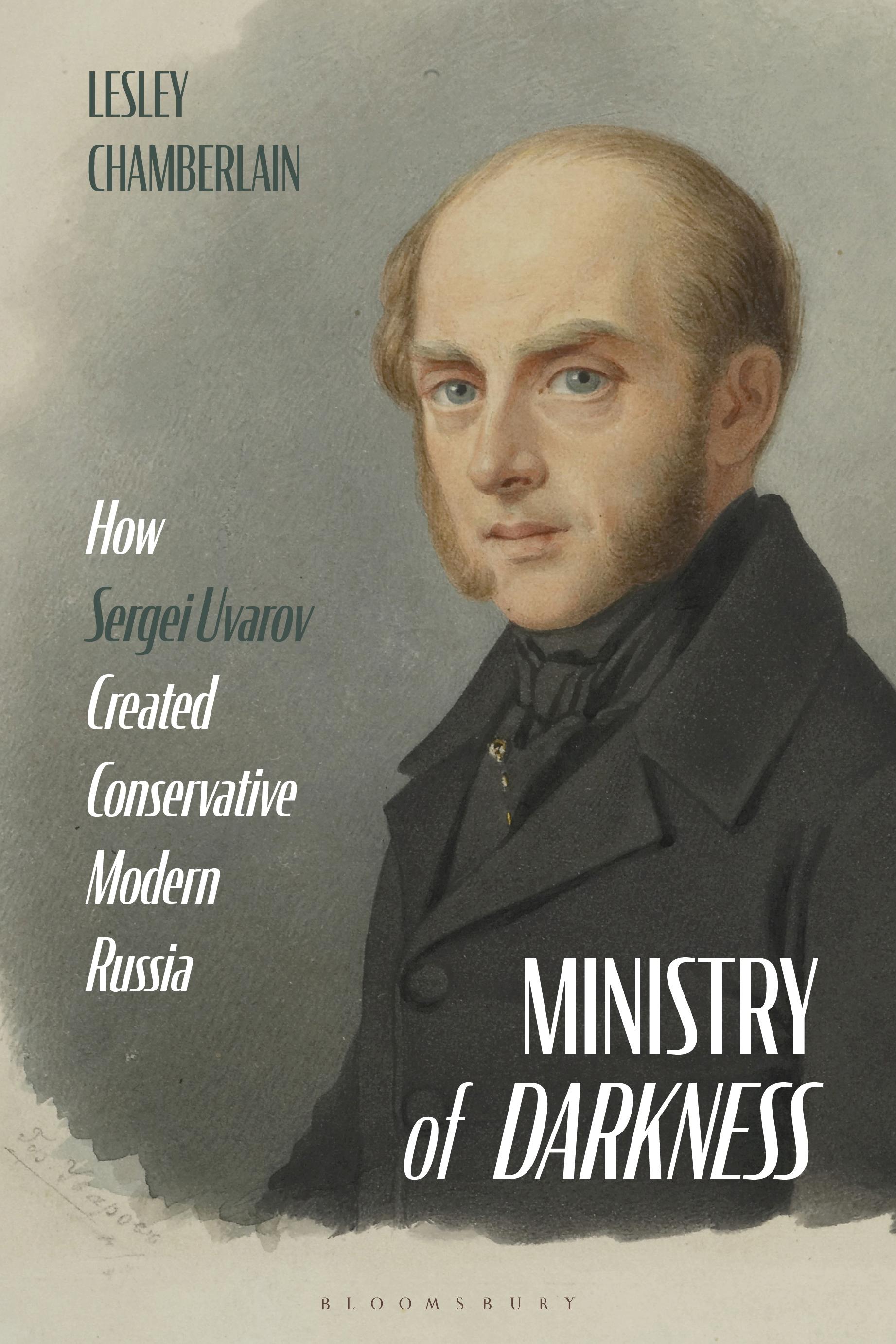
There is nothing new about the Russian conservatism Putin stands for, acclaimed writer Lesley Chamberlain argues. Rather, as Ministry of Darkness reveals, the roots of Russian conservatism can be traced back to the 19th century when Count Uvarov's notorious cry of 'Orthodoxy, Autocracy, Nationality!' rang through the streets of Russia.
Sergei Uvarov was no straightforward conservative; indeed, this man was at once both the pioneering educational reformer who founded the Arzamas Writers' Club to which Pushkin belonged, and the Minister who tyrannised and censored Russia's literary scene. How, then, do we reconcile such extreme contradictions in one person? Through Chamberlain's intimate examination of Uvarov's life and skilled analysis of Russian conservatism, readers learn how the many paradoxes that dominated Uvarov's personal and political life are those which, writ large, have forged the identity of conservative modern Russia and its relationship with the West.
This fascinating book sheds new light on an often overlooked historical actor and offers a timely assessment of the 19th-century 'Russian predicament'. In doing so, Chamberlain teases out the reasons why the country continues to baffle Western observers and policymakers, making this essential reading both students of Russian history and those who want to further understand Russia as it is today.
Sergei Uvarov was no straightforward conservative; indeed, this man was at once both the pioneering educational reformer who founded the Arzamas Writers' Club to which Pushkin belonged, and the Minister who tyrannised and censored Russia's literary scene. How, then, do we reconcile such extreme contradictions in one person? Through Chamberlain's intimate examination of Uvarov's life and skilled analysis of Russian conservatism, readers learn how the many paradoxes that dominated Uvarov's personal and political life are those which, writ large, have forged the identity of conservative modern Russia and its relationship with the West.
This fascinating book sheds new light on an often overlooked historical actor and offers a timely assessment of the 19th-century 'Russian predicament'. In doing so, Chamberlain teases out the reasons why the country continues to baffle Western observers and policymakers, making this essential reading both students of Russian history and those who want to further understand Russia as it is today.
Payez facilement par carte, Klarna, Apple Pay ou Google Pay. Pas satisfait ? Vous avez toujours une garantie de remboursement de 14 jours. En savoir plus dans nos conditions. Si vous avez des questions, envoyez-nous un e-mail à hello@memmo.org.
Memmo facilite tes études, où que tu sois dans le monde. On rassemble tes manuels de cours et des outils d'étude intelligents au même endroit : résumés, quiz, podcasts et flashcards. Et il y a Ted, ton compagnon d'étude qui répond à toutes tes questions. Plus de 50 000 étudiants étudient déjà ici – conçu pour t'aider à apprendre plus vite et à moins stresser.