
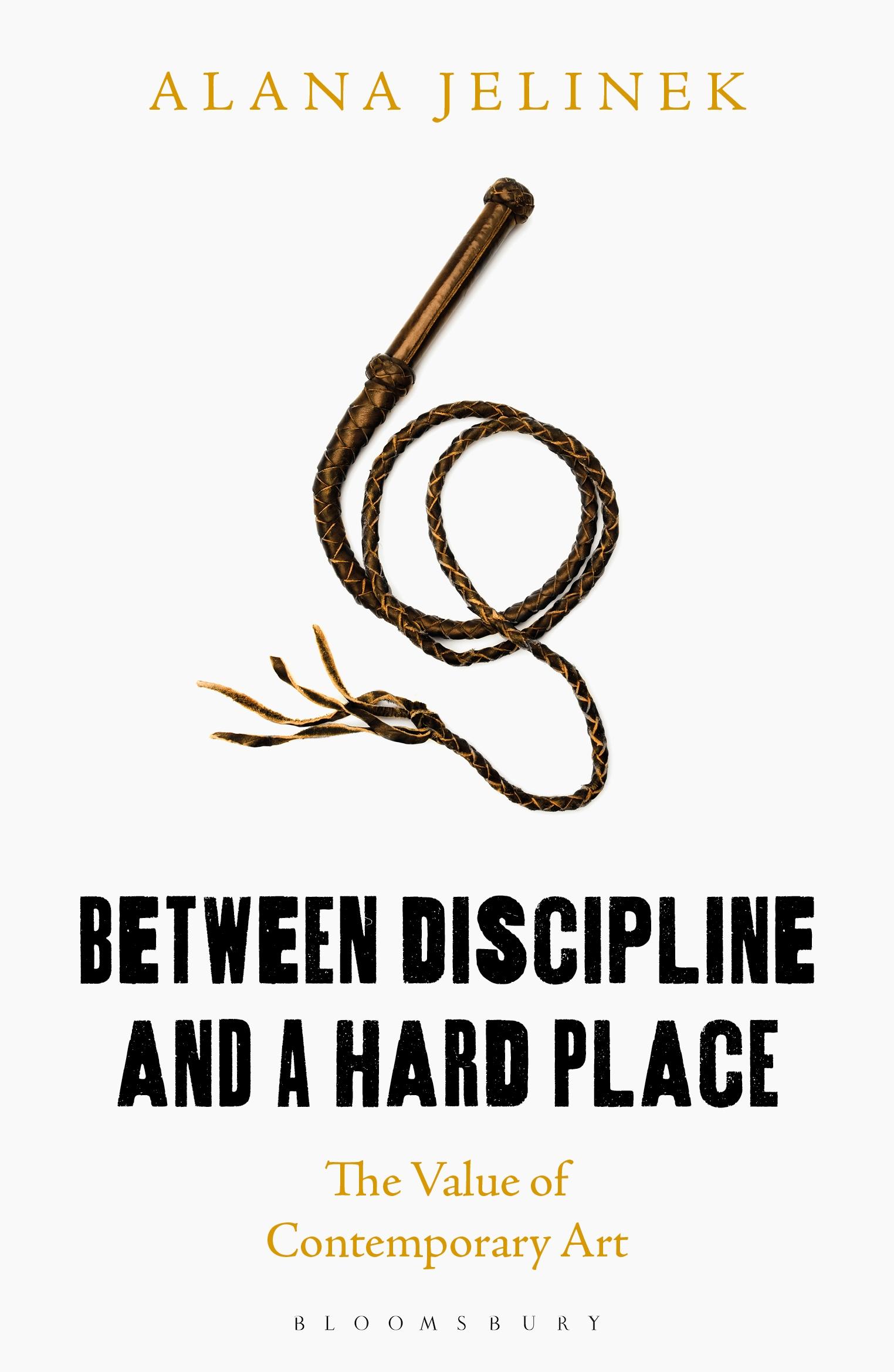
Written from the perspective of a practising artist, this book proposes that, against a groundswell of historians, museums and commentators claiming to speak on behalf of art, it is artists alone who may define what art really is.
Jelinek contends that while there are objects called 'art' in museums from deep into human history and from around the globe - from Hans Sloane's collection, which became the foundation of the British Museum, to Alfred Barr's inclusion of 'primitive art' within the walls of MoMA, the Museum of Modern Art - only those that have been made with the knowledge and discipline of art should rightly be termed as such. Policing the definition of art in this way is not to entrench it as an elitist occupation, but in order to focus on its liberal democratic potential.
Between Discipline and a Hard Place describes the value of art outside the current preoccupation with economic considerations yet without resorting to a range of stereotypical and ultimately instrumentalist political or social goods, such as social inclusion or education. A wider argument is also made for disciplinarity, as Jelinek discusses the great potential as well as the pitfalls of interdisciplinary and multidisciplinary working, particularly with the so-called 'creative' arts.
A passionate treatise arguing for a new way of understanding art that forefronts the role of the artist and the importance of inclusion within both the concept of art and the art world.
Jelinek contends that while there are objects called 'art' in museums from deep into human history and from around the globe - from Hans Sloane's collection, which became the foundation of the British Museum, to Alfred Barr's inclusion of 'primitive art' within the walls of MoMA, the Museum of Modern Art - only those that have been made with the knowledge and discipline of art should rightly be termed as such. Policing the definition of art in this way is not to entrench it as an elitist occupation, but in order to focus on its liberal democratic potential.
Between Discipline and a Hard Place describes the value of art outside the current preoccupation with economic considerations yet without resorting to a range of stereotypical and ultimately instrumentalist political or social goods, such as social inclusion or education. A wider argument is also made for disciplinarity, as Jelinek discusses the great potential as well as the pitfalls of interdisciplinary and multidisciplinary working, particularly with the so-called 'creative' arts.
A passionate treatise arguing for a new way of understanding art that forefronts the role of the artist and the importance of inclusion within both the concept of art and the art world.
Payez facilement par carte, Klarna, Apple Pay ou Google Pay. Pas satisfait ? Vous avez toujours une garantie de remboursement de 14 jours. En savoir plus dans nos conditions. Si vous avez des questions, envoyez-nous un e-mail à hello@memmo.org.
Memmo facilite tes études, où que tu sois dans le monde. On rassemble tes manuels de cours et des outils d'étude intelligents au même endroit : résumés, quiz, podcasts et flashcards. Et il y a Ted, ton compagnon d'étude qui répond à toutes tes questions. Plus de 50 000 étudiants étudient déjà ici – conçu pour t'aider à apprendre plus vite et à moins stresser.