
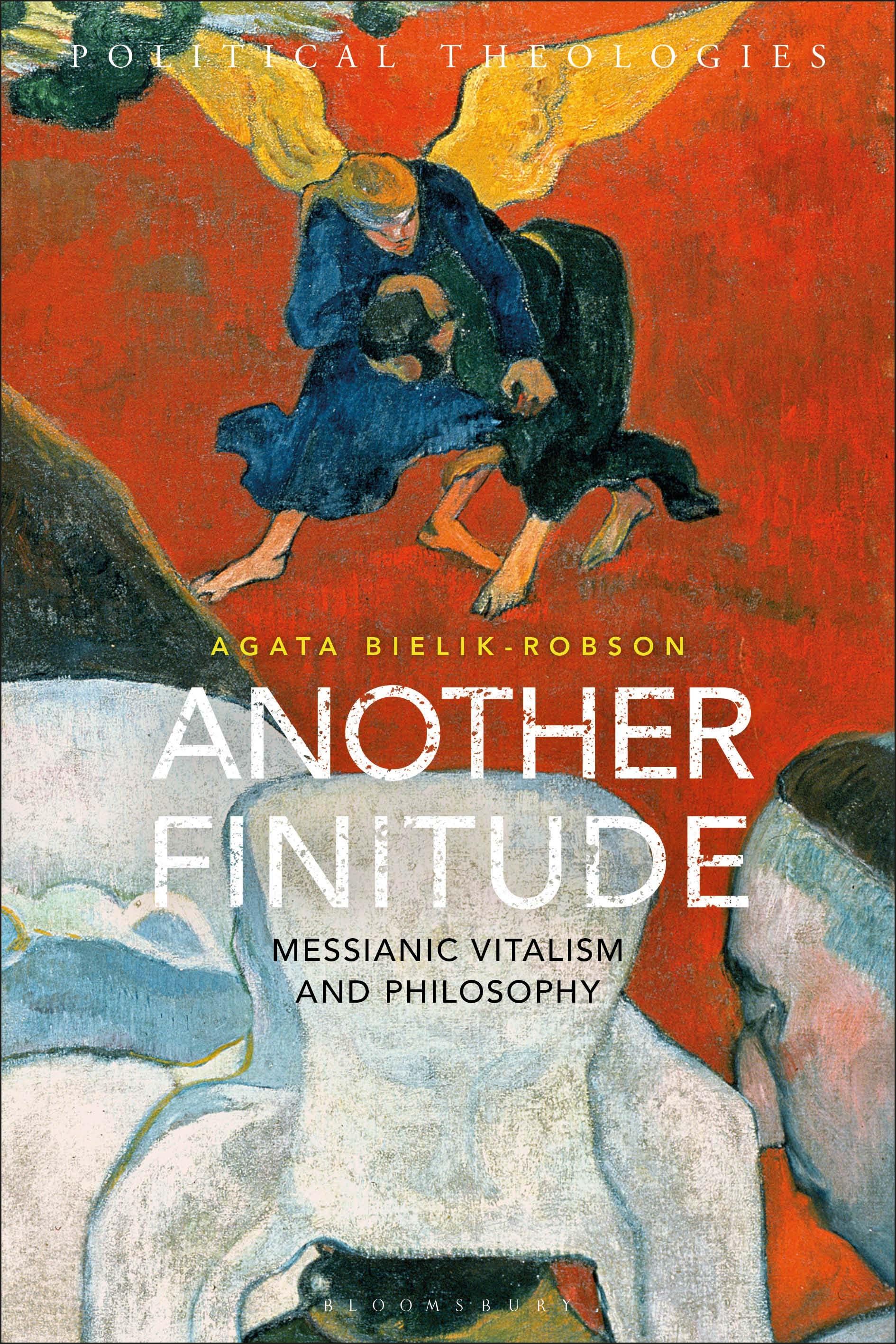
Beginning from the notion of finite life, Another Finitude takes this staple subject from post-Heideggerian philosophy and opposes it to the onto-theological concept of infinity, represented by an eternal absolute. Although critical of Heidegger and his definition of finitude as 'being-towards-death', this book does not revert to the ontological idea of infinity secured in the sacred image of immortality. But it also does not want to give up on infinity altogether; the infinite is transposed, so it can become a necessary moment of the finite life.
A theological framework for the new elaboration of the concept of finitude is crucial; but instead of following the Lutheran formula, Agata Bielik-Robson turns to the sources of Judaism. Taking inspiration from the Jewish idea of torat hayim, the principle of finite life, which found the best expression in the biblical sentence: love strong as death; love emerges as the alternative marker of finitude, allowing to us redefine it in an affirmative way. By tracing the avatars of love in the group of 20th-century thinkers, or 'messianic vitalists'–Benjamin, Rosenzweig, Arendt, Derrida, and (deeply revised) Freud–the book attempts to demonstrate the possibility of such affirmation. Love becomes the new 'infinite-in-the-finite'; love in all its forms, from the original libidinal endowment of the human psyche to the last metamorphoses of agape, the Greco-Christian divine love.
A theological framework for the new elaboration of the concept of finitude is crucial; but instead of following the Lutheran formula, Agata Bielik-Robson turns to the sources of Judaism. Taking inspiration from the Jewish idea of torat hayim, the principle of finite life, which found the best expression in the biblical sentence: love strong as death; love emerges as the alternative marker of finitude, allowing to us redefine it in an affirmative way. By tracing the avatars of love in the group of 20th-century thinkers, or 'messianic vitalists'–Benjamin, Rosenzweig, Arendt, Derrida, and (deeply revised) Freud–the book attempts to demonstrate the possibility of such affirmation. Love becomes the new 'infinite-in-the-finite'; love in all its forms, from the original libidinal endowment of the human psyche to the last metamorphoses of agape, the Greco-Christian divine love.
Payez facilement par carte, Klarna, Apple Pay ou Google Pay. Pas satisfait ? Vous avez toujours une garantie de remboursement de 14 jours. En savoir plus dans nos conditions. Si vous avez des questions, envoyez-nous un e-mail à hello@memmo.org.
Memmo facilite tes études, où que tu sois dans le monde. On rassemble tes manuels de cours et des outils d'étude intelligents au même endroit : résumés, quiz, podcasts et flashcards. Et il y a Ted, ton compagnon d'étude qui répond à toutes tes questions. Plus de 50 000 étudiants étudient déjà ici – conçu pour t'aider à apprendre plus vite et à moins stresser.