
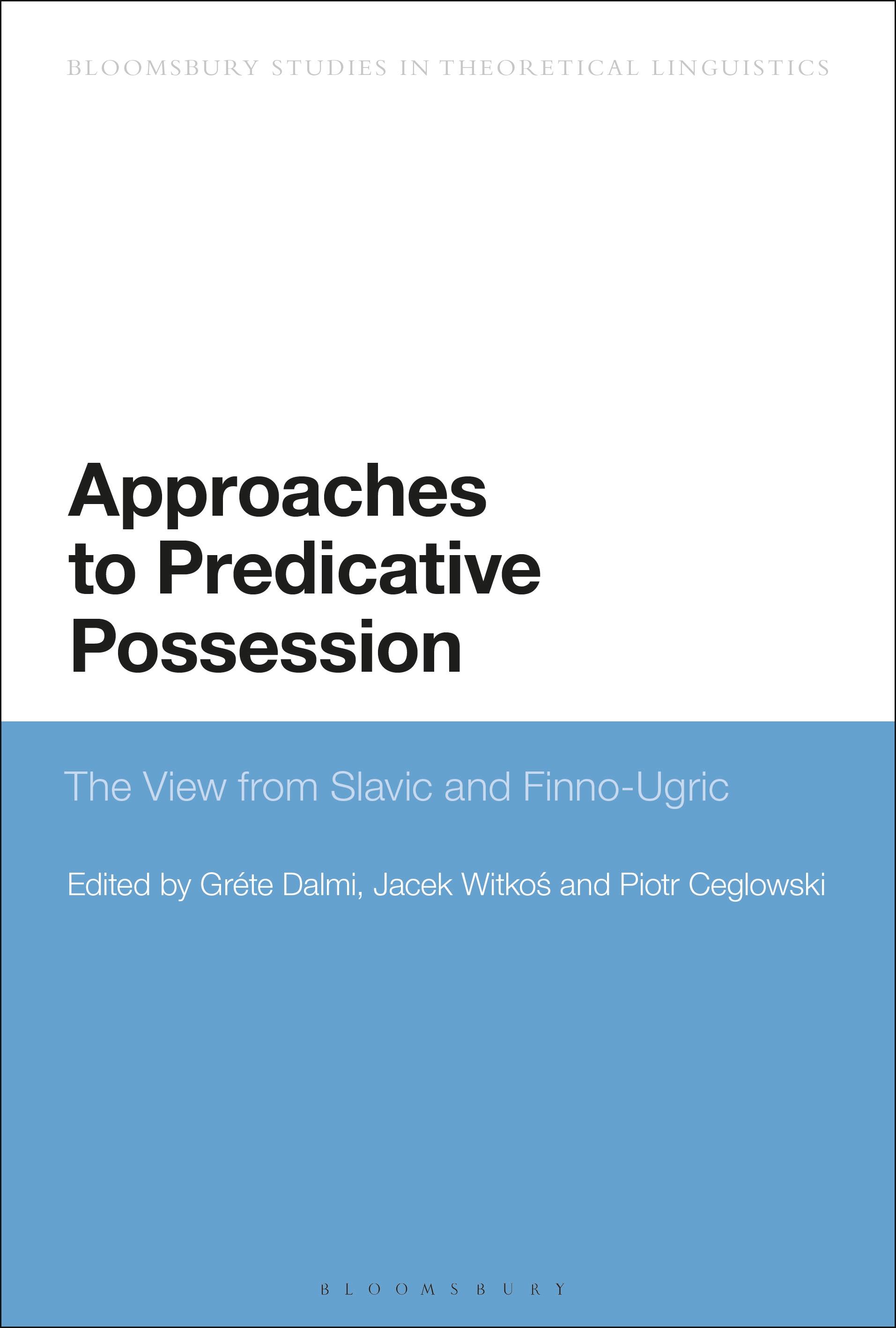
This book discusses existential and possessive constructions in two important, yet under-studied, language families, Slavic and Finno-Ugric. Using data from the Slavic languages of Polish, Belarusian and Russian, and the Finno-Ugric languages of Finnish, Hungarian, Meadow Mari, Komi-Permiyak and Udmurt, as well as the closely related Selkup of the Samoyedic family, the chapters in this volume analyse predicative possession in current syntactic terms.
Seeking an answer to the theoretical question of whether BE-possessives and HAVE-possessives are just accidental values of the 'Possessive Parameter' or are intrinsically related, this book takes a comparative approach to a whole range of syntactic and semantic phenomena that appear in these constructions, including the definiteness restriction, genitive of negation, person/number agreement, argument structure and extractability. The individual case studies can be easily integrated into the Principles & Parameters framework in terms of parametric variation. Approaches to Predicative Possession is an important contribution to our understanding of predicative possession across languages, with findings that can be fruitfully extended to other language families. It is an equally useful source of information for theoretical linguists, typologists, and graduate students of linguistics.
Seeking an answer to the theoretical question of whether BE-possessives and HAVE-possessives are just accidental values of the 'Possessive Parameter' or are intrinsically related, this book takes a comparative approach to a whole range of syntactic and semantic phenomena that appear in these constructions, including the definiteness restriction, genitive of negation, person/number agreement, argument structure and extractability. The individual case studies can be easily integrated into the Principles & Parameters framework in terms of parametric variation. Approaches to Predicative Possession is an important contribution to our understanding of predicative possession across languages, with findings that can be fruitfully extended to other language families. It is an equally useful source of information for theoretical linguists, typologists, and graduate students of linguistics.
Payez facilement par carte, Klarna, Apple Pay ou Google Pay. Pas satisfait ? Vous avez toujours une garantie de remboursement de 14 jours. En savoir plus dans nos conditions. Si vous avez des questions, envoyez-nous un e-mail à hello@memmo.org.
Memmo facilite tes études, où que tu sois dans le monde. On rassemble tes manuels de cours et des outils d'étude intelligents au même endroit : résumés, quiz, podcasts et flashcards. Et il y a Ted, ton compagnon d'étude qui répond à toutes tes questions. Plus de 50 000 étudiants étudient déjà ici – conçu pour t'aider à apprendre plus vite et à moins stresser.