
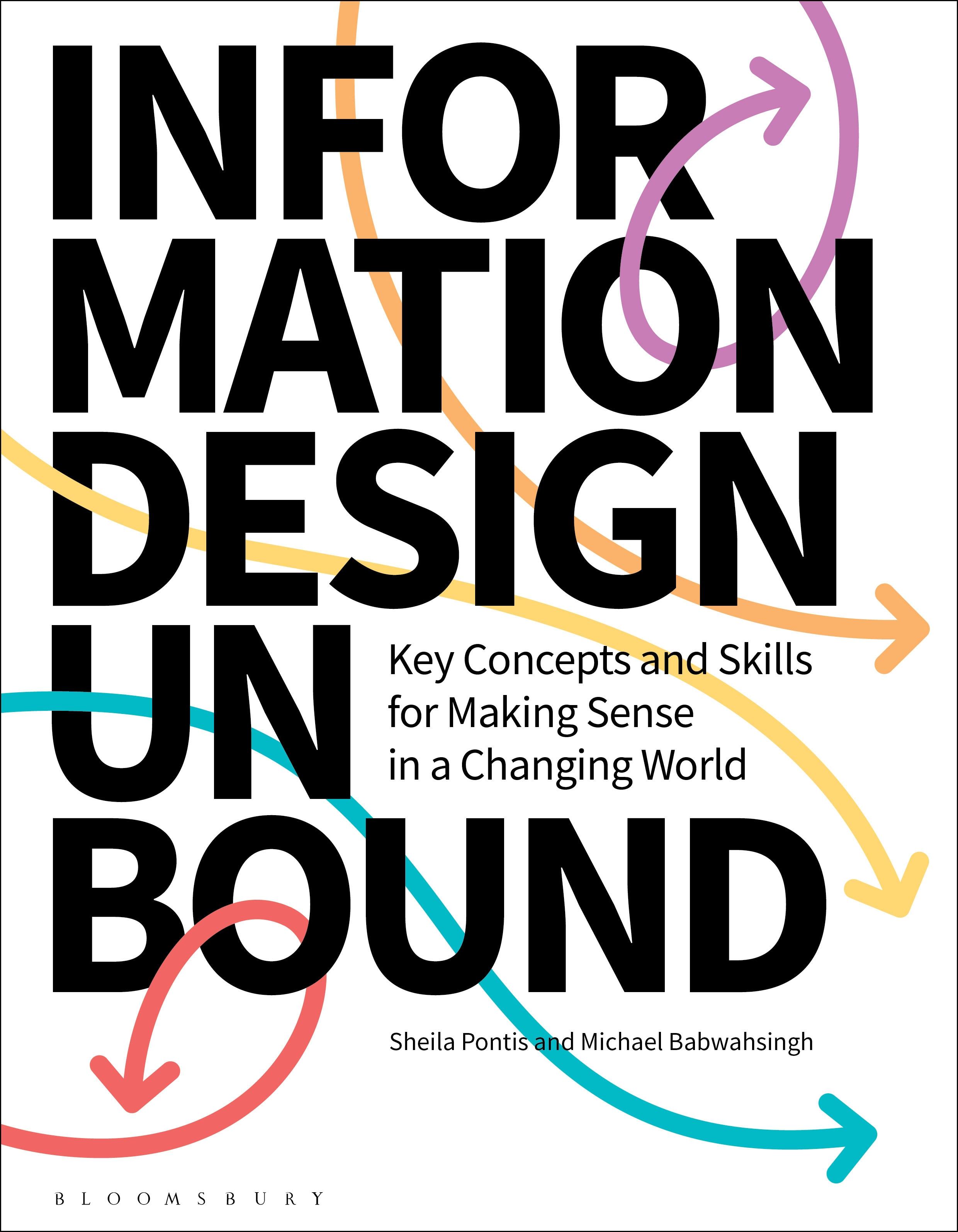
As everyday tasks grow more confusing, and as social and global problems grow more complex, the information designer's role in bringing clarity has reached a new level of importance. In order to have a positive impact, they must go beyond conventional approaches to uncover real needs, make insightful connections, and develop effective solutions. Information Design Unbound provides a clear, engaging introduction to the field, and prepares students to be strategic thinkers and visual problem solvers who can confidently make sense in a changing world.
Sheila Pontis and Michael Babwahsingh present a holistic view of information design, synthesizing decades of research, cross-disciplinary knowledge, and emerging practices. The book opens by laying a foundation in the field, first painting the bigger picture of what it is and how it originated, before explaining the scientific and cultural dimensions of how people perceive and understand visual information. A discussion of professional practices, ethical considerations, and the expanding scale of challenges sheds light on the day-to-day work of information designers today. Detailed chapters then delve into the four areas that are integral to all types of information design work: visual thinking, research, sensemaking, and design. The final section of the book puts everything together, with detailed project walk-throughs in areas such as icon design, instructions, wayfinding, organizational strategy, and healthcare system change.
Written and designed with students' needs in mind, this book brings information design fundamentals to life: exercises allow students to put lessons directly into practice, case studies demonstrate how information designers think and work, and generous illustrations clarify concepts in a visually engaging way.
Information Design Unbound helps beginning designers build the mindset and skillset to navigate visual communication challenges wherever they may arise.
Sheila Pontis and Michael Babwahsingh present a holistic view of information design, synthesizing decades of research, cross-disciplinary knowledge, and emerging practices. The book opens by laying a foundation in the field, first painting the bigger picture of what it is and how it originated, before explaining the scientific and cultural dimensions of how people perceive and understand visual information. A discussion of professional practices, ethical considerations, and the expanding scale of challenges sheds light on the day-to-day work of information designers today. Detailed chapters then delve into the four areas that are integral to all types of information design work: visual thinking, research, sensemaking, and design. The final section of the book puts everything together, with detailed project walk-throughs in areas such as icon design, instructions, wayfinding, organizational strategy, and healthcare system change.
Written and designed with students' needs in mind, this book brings information design fundamentals to life: exercises allow students to put lessons directly into practice, case studies demonstrate how information designers think and work, and generous illustrations clarify concepts in a visually engaging way.
Information Design Unbound helps beginning designers build the mindset and skillset to navigate visual communication challenges wherever they may arise.
Pages: 272
Catégorie: Konst, Design & Fotografi
e-ISBN: 9781350054158
Poids d'expédition: 1.2 kg
Expédié sous: 1-2 jours
Payez facilement par carte, Klarna, Apple Pay ou Google Pay. Pas satisfait ? Vous avez toujours une garantie de remboursement de 14 jours. En savoir plus dans nos conditions. Si vous avez des questions, envoyez-nous un e-mail à hello@memmo.org.
Memmo facilite tes études, où que tu sois dans le monde. On rassemble tes manuels de cours et des outils d'étude intelligents au même endroit : résumés, quiz, podcasts et flashcards. Et il y a Ted, ton compagnon d'étude qui répond à toutes tes questions. Plus de 50 000 étudiants étudient déjà ici – conçu pour t'aider à apprendre plus vite et à moins stresser.