
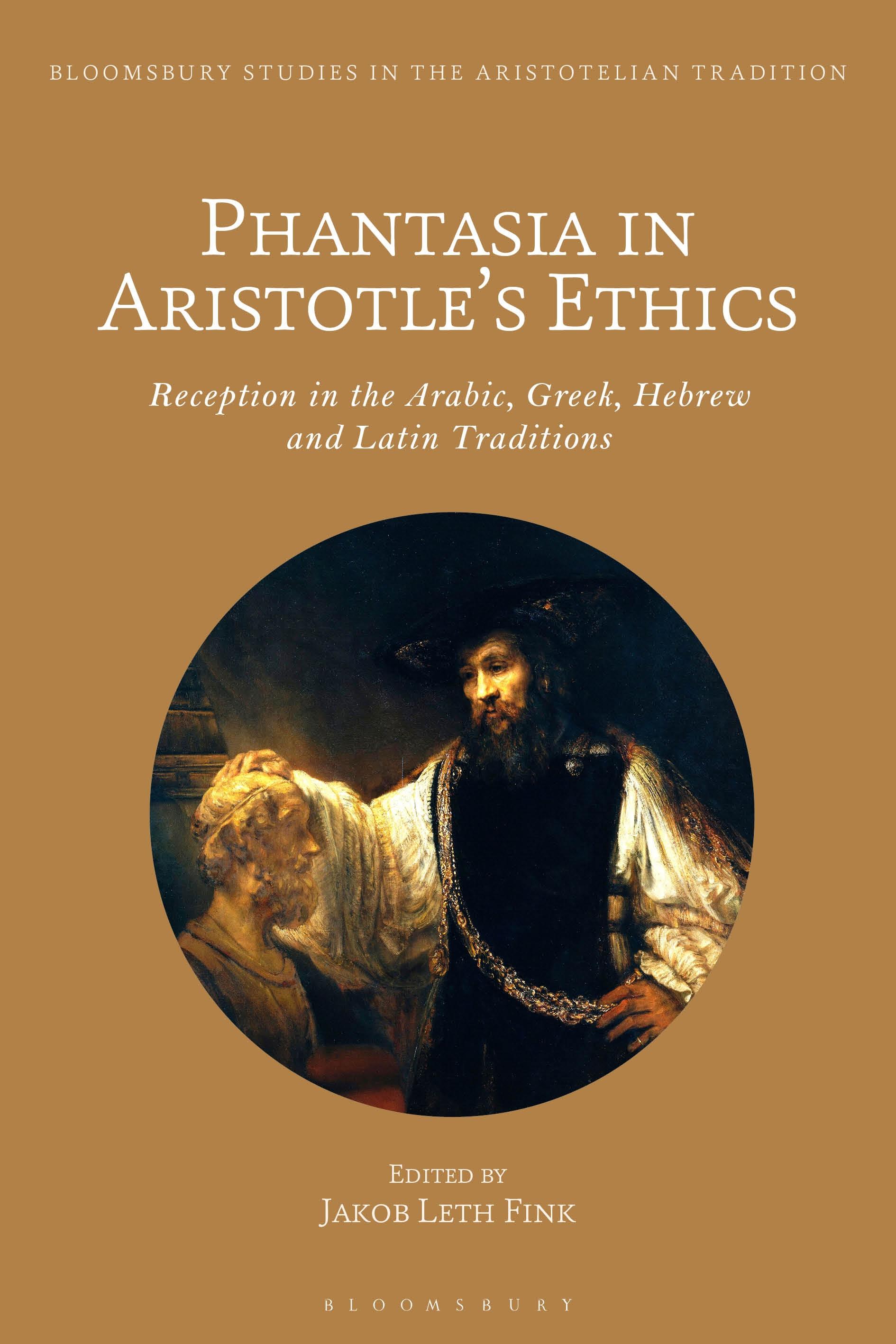
In the Nicomachean Ethics, Aristotle suggests that a moral principle 'does not immediately appear to the man who has been corrupted by pleasure or pain'. Phantasia in Aristotle's Ethics investigates his claim and its reception in ancient and medieval Aristotelian traditions, including Arabic, Greek, Hebrew and Latin.
While contemporary commentators on the Ethics have overlooked Aristotle's remark, his ancient and medieval interpreters made substantial contributions towards a clarification of the claim's meaning and relevance. Even when the hazards of transmission have left no explicit comments on this particular passage, as is the case in the Arabic tradition, medieval responders still offer valuable interpretations of phantasia (appearance) and its role in ethical deliberation and action. This volume casts light on these readings, showing how the distant voices from the medieval Arabic, Greek, Hebrew and Latin Aristotelian traditions still contribute to contemporary debate concerning phantasia, motivation and deliberation in Aristotle's Ethics.
While contemporary commentators on the Ethics have overlooked Aristotle's remark, his ancient and medieval interpreters made substantial contributions towards a clarification of the claim's meaning and relevance. Even when the hazards of transmission have left no explicit comments on this particular passage, as is the case in the Arabic tradition, medieval responders still offer valuable interpretations of phantasia (appearance) and its role in ethical deliberation and action. This volume casts light on these readings, showing how the distant voices from the medieval Arabic, Greek, Hebrew and Latin Aristotelian traditions still contribute to contemporary debate concerning phantasia, motivation and deliberation in Aristotle's Ethics.
Payez facilement par carte, Klarna, Apple Pay ou Google Pay. Pas satisfait ? Vous avez toujours une garantie de remboursement de 14 jours. En savoir plus dans nos conditions. Si vous avez des questions, envoyez-nous un e-mail à hello@memmo.org.
Memmo facilite tes études, où que tu sois dans le monde. On rassemble tes manuels de cours et des outils d'étude intelligents au même endroit : résumés, quiz, podcasts et flashcards. Et il y a Ted, ton compagnon d'étude qui répond à toutes tes questions. Plus de 50 000 étudiants étudient déjà ici – conçu pour t'aider à apprendre plus vite et à moins stresser.