
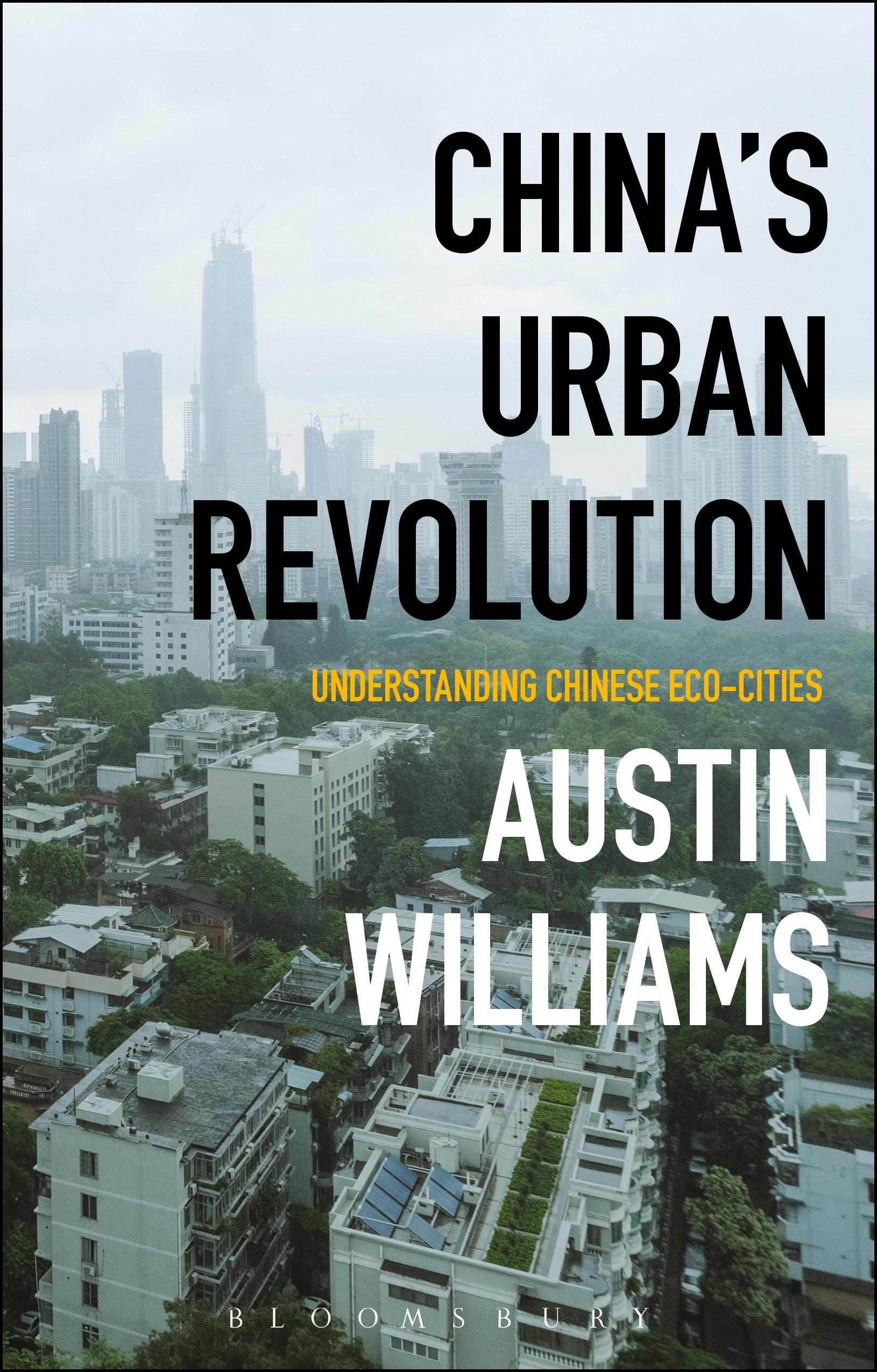
By 2025, China will have built fifteen new 'supercities' each with 25 million inhabitants. It will have created 250 'Eco-cities' as well: clean, green, car-free, people-friendly, high-tech urban centres. From the edge of an impending eco-catastrophe, we are arguably witnessing history's greatest environmental turnaround - an urban experiment that may provide valuable lessons for cities worldwide.
Whether or not we choose to believe the hype – there is little doubt that this is an experiment that needs unpicking, understanding, and learning from. Austin Williams, The Architectural Review's China correspondent, explores the progress and perils of China's vast eco-city program, describing the complexities which emerge in the race to balance the environment with industrialisation, quality with quantity, and the liberty of the individual with the authority of the Chinese state. Lifting the lid on the economic and social realities of the Chinese blueprint for eco-modernisation, Williams tells the story of China's rise, and reveals the pragmatic, political and economic motives that lurk behind the successes and failures of its eco-cities.
Will these new kinds of urban developments be good, humane, healthy places? Can China find a 'third way' in which humanity, nature, economic growth and sustainability are reconciled? And what lessons can we learn for our own vision of the urban future?
This is a timely and readable account which explores a range of themes – environmental, political, cultural and architectural – to show how the eco-city program sheds fascinating light on contemporary Chinese society, and provides a lens through which to view the politics of sustainability closer to home.
Whether or not we choose to believe the hype – there is little doubt that this is an experiment that needs unpicking, understanding, and learning from. Austin Williams, The Architectural Review's China correspondent, explores the progress and perils of China's vast eco-city program, describing the complexities which emerge in the race to balance the environment with industrialisation, quality with quantity, and the liberty of the individual with the authority of the Chinese state. Lifting the lid on the economic and social realities of the Chinese blueprint for eco-modernisation, Williams tells the story of China's rise, and reveals the pragmatic, political and economic motives that lurk behind the successes and failures of its eco-cities.
Will these new kinds of urban developments be good, humane, healthy places? Can China find a 'third way' in which humanity, nature, economic growth and sustainability are reconciled? And what lessons can we learn for our own vision of the urban future?
This is a timely and readable account which explores a range of themes – environmental, political, cultural and architectural – to show how the eco-city program sheds fascinating light on contemporary Chinese society, and provides a lens through which to view the politics of sustainability closer to home.
Pages: 240
Catégorie: Arkitektur & Stadsplanering
e-ISBN: 9781350003231
Poids d'expédition: 1.2 kg
Expédié sous: 1-2 jours
Payez facilement par carte, Klarna, Apple Pay ou Google Pay. Pas satisfait ? Vous avez toujours une garantie de remboursement de 14 jours. En savoir plus dans nos conditions. Si vous avez des questions, envoyez-nous un e-mail à hello@memmo.org.
Memmo facilite tes études, où que tu sois dans le monde. On rassemble tes manuels de cours et des outils d'étude intelligents au même endroit : résumés, quiz, podcasts et flashcards. Et il y a Ted, ton compagnon d'étude qui répond à toutes tes questions. Plus de 50 000 étudiants étudient déjà ici – conçu pour t'aider à apprendre plus vite et à moins stresser.