
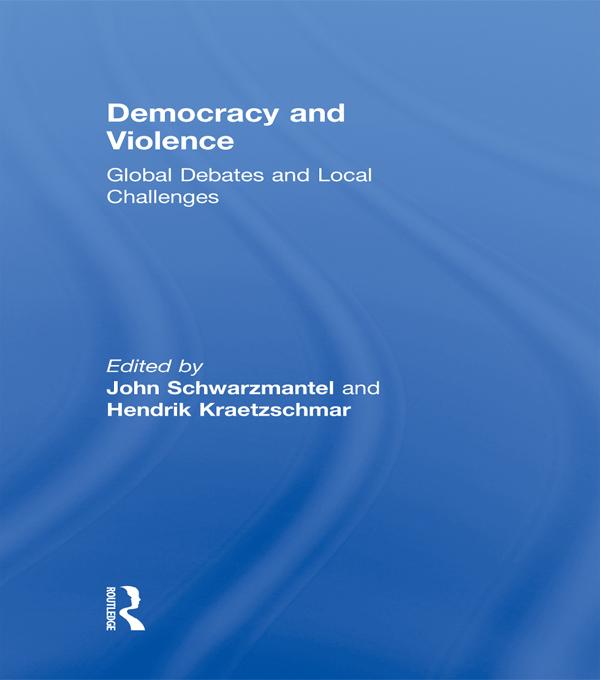
Illustrated most dramatically by the events of 9/11 and the subsequent ‘war on terror’, violence represents a challenge to democratic politics and to the establishment of liberal-democratic regimes. Liberal-democracies have themselves not hesitated to use violence and restrict civil liberties as a response to such challenges. These issues are at the centre of global politics and figure prominently in political debates today concerning multiculturalism, political exclusion and the politics of gender.
This book takes up these topics with reference to a wide range of case-studies, covering Latin America, the Middle East, Africa, Asia and Europe. It provides a theoretical framework clarifying the relationship between democracy and violence and presents original research surveying current hot-spots of violent conflict and the ways in which violence affects the prospects for democratic politics and for gender equality. Based on field-work carried out by specialists in the areas covered, this volume will be of high interest to students of democratic politics and to all those concerned with ways in which the recourse to violence could be reduced in a global context. This book has significant implications for policy-makers involved in attempts to develop safer and more peaceful ways of handling political and social conflict.
This book was published as a special issue of Democratizations.
Payez facilement par carte, Klarna, Apple Pay ou Google Pay. Pas satisfait ? Vous avez toujours une garantie de remboursement de 14 jours. En savoir plus dans nos conditions. Si vous avez des questions, envoyez-nous un e-mail à hello@memmo.org.
Memmo facilite tes études, où que tu sois dans le monde. On rassemble tes manuels de cours et des outils d'étude intelligents au même endroit : résumés, quiz, podcasts et flashcards. Et il y a Ted, ton compagnon d'étude qui répond à toutes tes questions. Plus de 50 000 étudiants étudient déjà ici – conçu pour t'aider à apprendre plus vite et à moins stresser.