
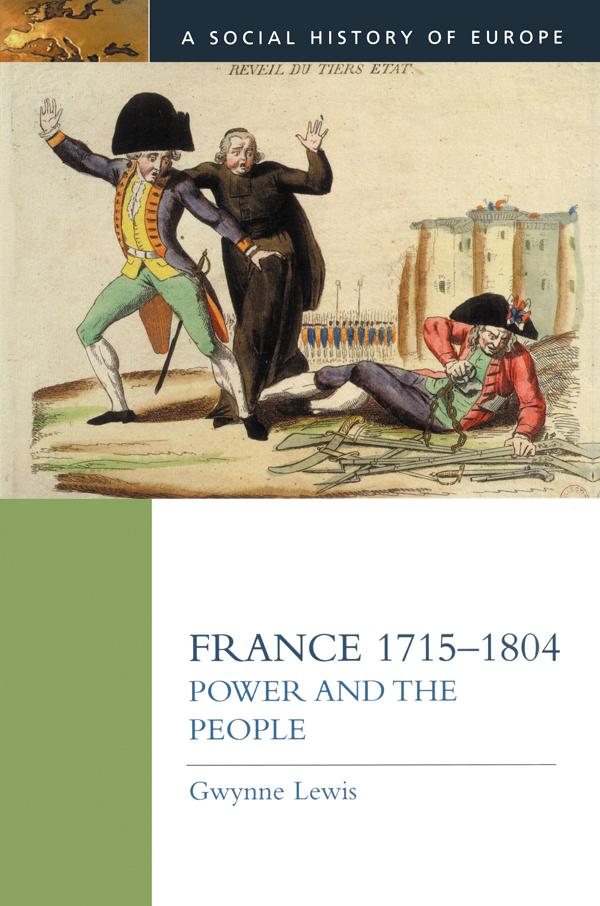
Gwynne Lewis’ history opens with a full analysis of all the components of traditional France, including political and religious structures, the seigneurial system, the bourgeoisie and the poor. Part two examines the meaning and challenge of the Enlightenment, with particular reference to women and the mass of the poor. Part three concentrates upon the relationship between the shift to laissez-faire economics, popular revolts and government repression, providing the essential background to the Revolutionary decade of the 1790s. The Revolution witnessed the rise of a politicised ‘Popular Movement’ that achieved, briefly, a measure of popular democracy. War and counter-revolution blocked the move towards real democracy, strengthened the authority of the centralised state, and enhanced the credibility of bourgeois political and economic power.
One of the main contentions of this work is that the failure of both monarchical and Revolutionary regimes to deal with the massive social problem of poverty played a far larger part in explaining the collapse of the Bourbons in 1789, and the failure of democracy during the 1790s, than most historians have allowed. Likewise, the importance of religion in directing the momentous events of this period has also been under-estimated.
Payez facilement par carte, Klarna, Apple Pay ou Google Pay. Pas satisfait ? Vous avez toujours une garantie de remboursement de 14 jours. En savoir plus dans nos conditions. Si vous avez des questions, envoyez-nous un e-mail à hello@memmo.org.
Memmo facilite tes études, où que tu sois dans le monde. On rassemble tes manuels de cours et des outils d'étude intelligents au même endroit : résumés, quiz, podcasts et flashcards. Et il y a Ted, ton compagnon d'étude qui répond à toutes tes questions. Plus de 50 000 étudiants étudient déjà ici – conçu pour t'aider à apprendre plus vite et à moins stresser.