
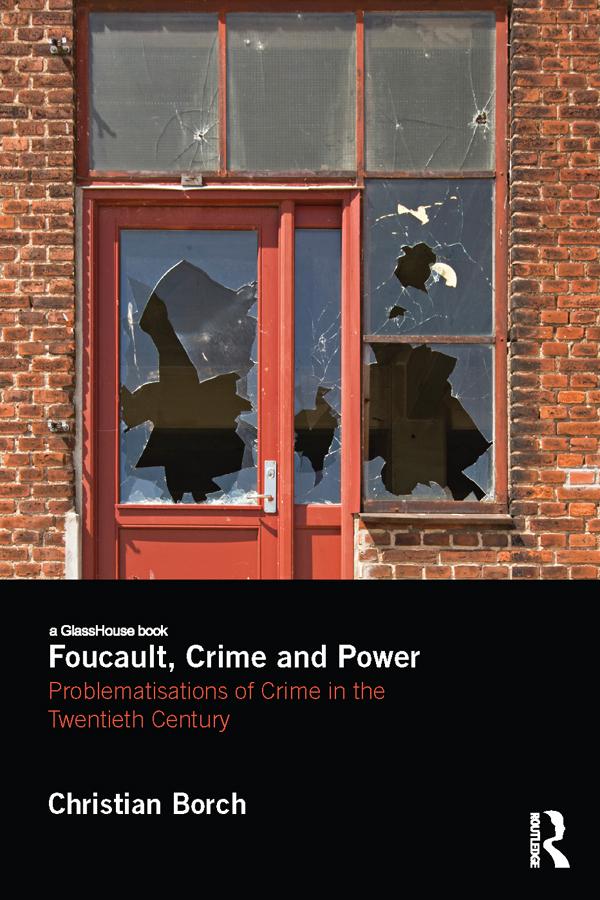
This book presents a Foucauldian problematisation analysis of crime, with a particular focus on the twentieth century. It considers how crime has been conceived as problem and, by scrutinising the responses that have been adapted to deal with crime, demonstrates how a range of power modalities have evolved throughout the twentieth century.
Christian Borch shows how the tendency of criminologists to focus on either disciplinary power or governmentality has neglected the broader complex of Foucault’s concerns: ignoring its historical underpinnings, whilst for the most part limiting studies to only very recent developments, without giving sufficient attention to their historical backdrop. The book uses developments in Denmark – developments that can be readily identified in most other western countries – as a paradigmatic case for understanding how crime has been problematised in the West. Thus, Foucault, Crime and Power: Problematisations of Crime in the Twentieth Century demonstrates that a Foucauldian approach to crime holds greater analytical potentials for criminological research than have so far been recognized.
Payez facilement par carte, Klarna, Apple Pay ou Google Pay. Pas satisfait ? Vous avez toujours une garantie de remboursement de 14 jours. En savoir plus dans nos conditions. Si vous avez des questions, envoyez-nous un e-mail à hello@memmo.org.
Memmo facilite tes études, où que tu sois dans le monde. On rassemble tes manuels de cours et des outils d'étude intelligents au même endroit : résumés, quiz, podcasts et flashcards. Et il y a Ted, ton compagnon d'étude qui répond à toutes tes questions. Plus de 50 000 étudiants étudient déjà ici – conçu pour t'aider à apprendre plus vite et à moins stresser.