
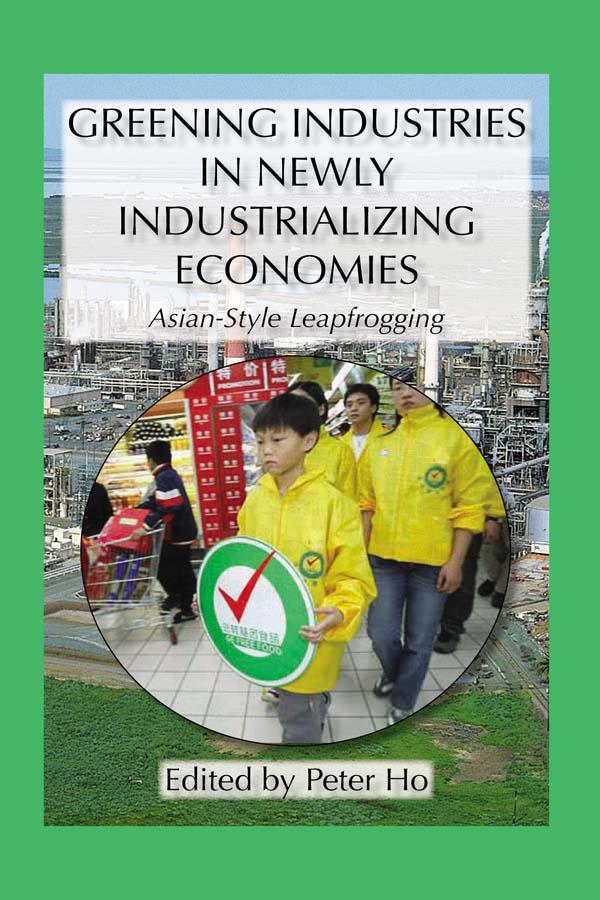
First published in 2006. Over the past decades, the world has witnessed the profound transformation of China, Vietnam, Taiwan and Singapore from impoverished developing regions into strong and internationally competitive economies. Also dubbed Newly Industrializing Economies (NIEs), it has become obvious that their rapid development has come at a price. Contrary to their economic successes, these NIEs have been much less successful in terms of ecological sustainability and environmental protection. A critical question in this respect is: how can the state effect the greening of industries and business without inhibiting economic growth? Some scholars have argued that NIEs are situated at an unique juncture: they have an unparalleled opportunity to ?nd different development paths and in so doing to provide models that other countries could follow. With the right policy mix, they might achieve rapid economic development while avoiding environmental degradation on the scale of that created by the United States, Europe-a Union member countries, and other earlier industrialized nations. “Doing it right the ?rst time” – by installing clean technologies and developing the capacity and the governance style to enforce environmental regulations – could lead to “leapfrogging” the development process, and building industrial economies that are both competitive and more sustainable than those economies with an older industrial base. This edited volume examines these issues through case-studies from China, Vietnam, Taiwan and Singapore. It is argued that the NIEs – ?rst and second generations alike – are not truly situated in a more favourable position that allows leapfrogging in the greening of industries. This book brings together a team of leading experts in their ? eld, ranging from development studies, sociology, political studies, and economics. It will be of interest to a wide readership of students and professionals concerned with development in contemporary Asia, with particular reference to environmental studies, industrial pollution control, social movements, and developmental state theory.
Pages: 224
Catégorie: Ekonomi & Utveckling
e-ISBN: 9781317792550
Poids d'expédition: 1.2 kg
Expédié sous: 1-2 jours
Payez facilement par carte, Klarna, Apple Pay ou Google Pay. Pas satisfait ? Vous avez toujours une garantie de remboursement de 14 jours. En savoir plus dans nos conditions. Si vous avez des questions, envoyez-nous un e-mail à hello@memmo.org.
Memmo facilite tes études, où que tu sois dans le monde. On rassemble tes manuels de cours et des outils d'étude intelligents au même endroit : résumés, quiz, podcasts et flashcards. Et il y a Ted, ton compagnon d'étude qui répond à toutes tes questions. Plus de 50 000 étudiants étudient déjà ici – conçu pour t'aider à apprendre plus vite et à moins stresser.
Tu pourrais aussi aimer
Acheter le livre0