
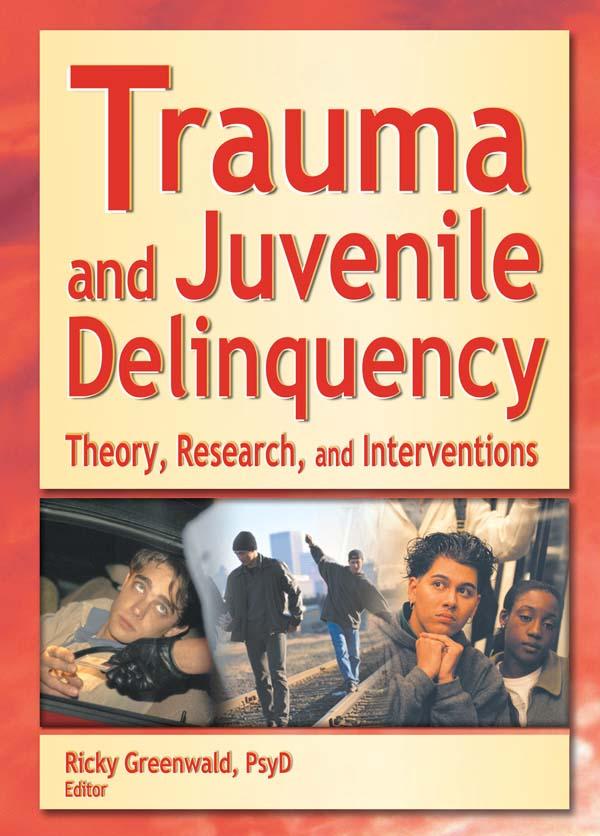
Learn how and why trauma is relevant to juvenile delinquencyand what to do about it!
This groundbreaking book addresses the connection between childhood trauma and juvenile delinquency. Trauma and Juvenile Delinquency: Theory, Research, and Interventions begins with two chapters presenting theoretical models of the relationship between trauma and the development/persistence of antisocial behavior. Another chapter addresses trauma-related assessment issues for juveniles, and several chapters present cutting-edge research on various aspects of the relationship between trauma and delinquency. Finally, several chapters focus on theory-based and empirically supported trauma-focused therapeutic interventions for juvenile delinquents. No other single source provides such breadth and depth of coverage on this topic!
From the editor: Disruptive behavior disorders are by far the largest type of mental health referral for children and adolescents, while juvenile crime and violence continue to be major social concerns. Several bodies of literature have converged to suggest that trauma is more than incidental to the problem of juvenile delinquency, it contributes to the problem.
Trauma and Juvenile Delinquency: Theory, Research, and Interventions explores:
- how trauma relates to conduct disorder
- the connection between traumatic victimization and oppositional/defiance problems
- ways to assess PTSD in adolescents
- how exposure to violence, delinquent activity, and posttraumatic stress symptomatology are related
- the unique trauma histories of incarcerated girls and the problems they have adjusting to life within the juvenile justice system
- how to develop group therapy services for incarcerated male juvenile offenders with PTSD
This valuable book also examines the effectiveness of EMDR (Eye Movement Desensitization and Reprocessing) for boys with conduct problems, MASTR (Motivation - Adaptive Skills - Trauma Resolution) for teens with school-related problems, and CPT (Cognitive Processing Therapy) for juvenile delinquents with post-traumatic stress disorder.
Payez facilement par carte, Klarna, Apple Pay ou Google Pay. Pas satisfait ? Vous avez toujours une garantie de remboursement de 14 jours. En savoir plus dans nos conditions. Si vous avez des questions, envoyez-nous un e-mail à hello@memmo.org.
Memmo facilite tes études, où que tu sois dans le monde. On rassemble tes manuels de cours et des outils d'étude intelligents au même endroit : résumés, quiz, podcasts et flashcards. Et il y a Ted, ton compagnon d'étude qui répond à toutes tes questions. Plus de 50 000 étudiants étudient déjà ici – conçu pour t'aider à apprendre plus vite et à moins stresser.