
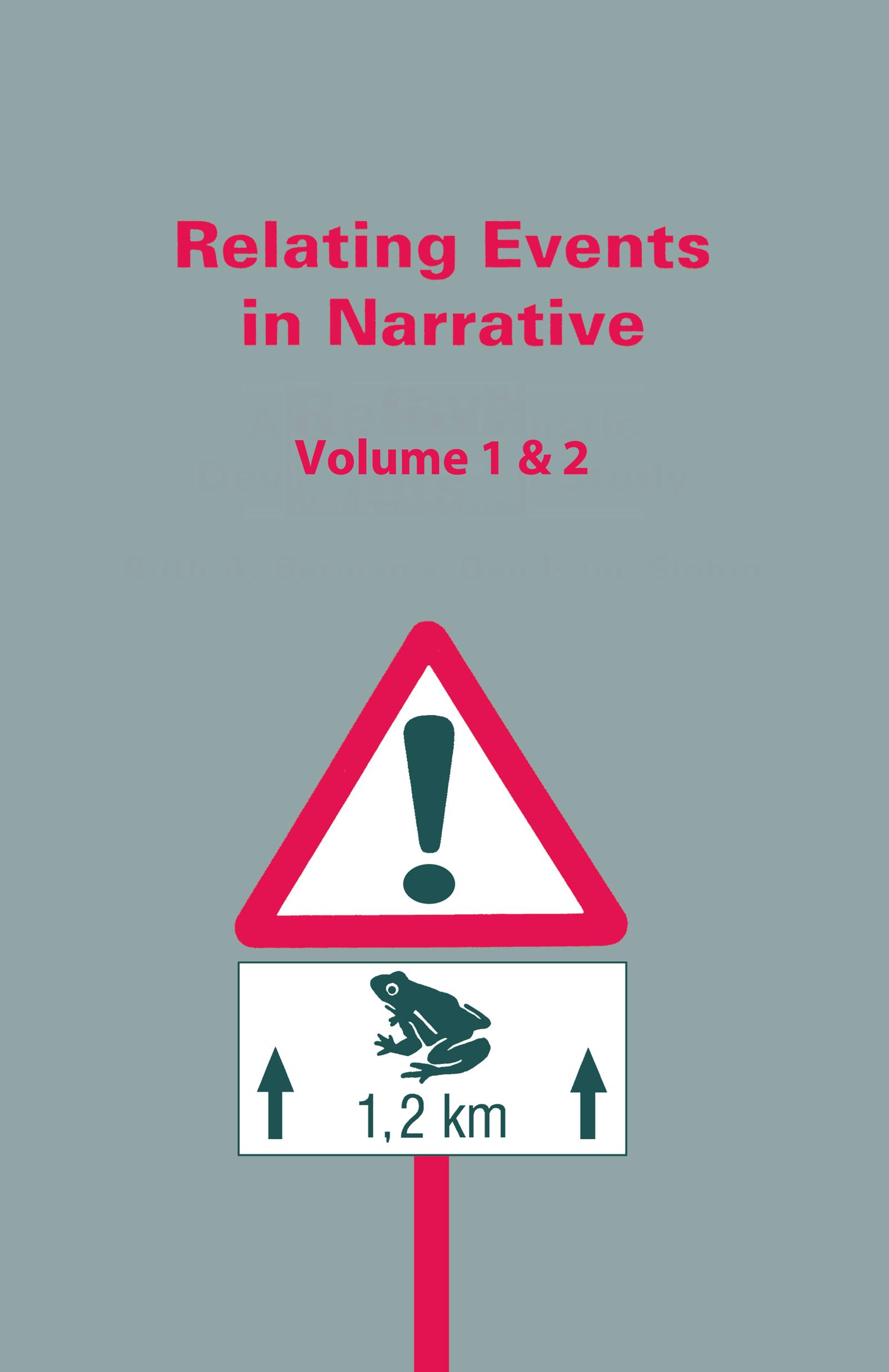
This volume represents the culmination of an extensive research project that studied the development of linguistic form/function relations in narrative discourse. It is unique in the extent of data which it analyzes--more than 250 texts from children and adults speaking five different languages--and in its crosslinguistic, typological focus. It is the first book to address the issue of how the structural properties and rhetorical preferences of different native languages--English, German, Spanish, Hebrew, and Turkish--impinge on narrative abilities across different phases of development.
The work of Berman and Slobin and their colleagues provides insight into the interplay between shared, possibly universal, patterns in the developing ability to create well-constructed, globally organized narratives among preschoolers from three years of age compared with school children and adults, contrasted against the impact of typological and rhetorical features of particular native languages on how speakers express these abilities in the process of "relating events in narrative."
This volume also makes a special contribution to the field of language acquisition and development by providing detailed analyses of how linguistic forms come to be used in the service of narrative functions, such as the expression of temporal relations of simultaneity and retrospection, perspective-taking on events, and textual connectivity. To present this information, the authors prepared in-depth analyses of a wide range of linguistic systems, including tense-aspect marking, passive and middle voice, locative and directional predications, connectivity markers, null subjects, and relative clause constructions. In contrast to most work in the field of language acquisition, this book focuses on developments in the use of these early forms in extended discourse--beyond the initial phase of early language development.
Payez facilement par carte, Klarna, Apple Pay ou Google Pay. Pas satisfait ? Vous avez toujours une garantie de remboursement de 14 jours. En savoir plus dans nos conditions. Si vous avez des questions, envoyez-nous un e-mail à hello@memmo.org.
Memmo facilite tes études, où que tu sois dans le monde. On rassemble tes manuels de cours et des outils d'étude intelligents au même endroit : résumés, quiz, podcasts et flashcards. Et il y a Ted, ton compagnon d'étude qui répond à toutes tes questions. Plus de 50 000 étudiants étudient déjà ici – conçu pour t'aider à apprendre plus vite et à moins stresser.