
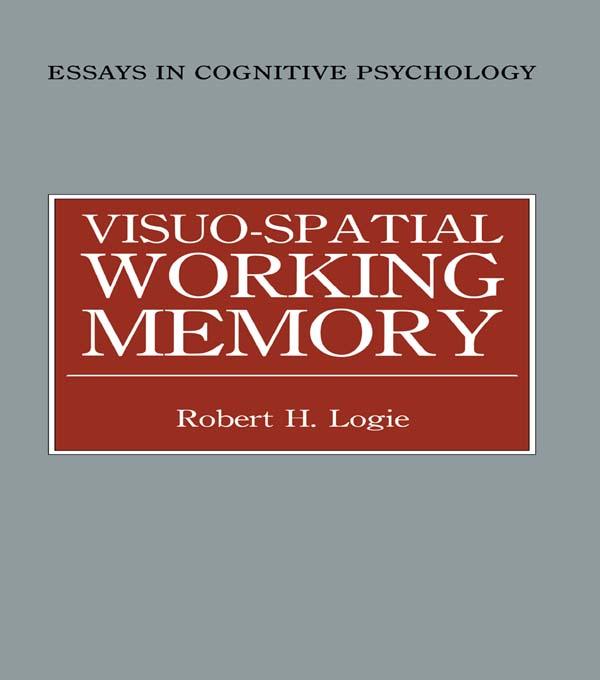
Representation of the visual and spatial properties of our environment is a pivotal requirement of everyday cognition. We can mentally represent the visual form of objects. We can extract information from several of the senses as to the location of objects in relation to ourselves and to other objects nearby. For some of those objects we can reach out and manipulate them. We can also imagine ourselves manipulating objects in advance of doing so, or even when it would be impossible to do so physically. The problem posed to science is how these cognitive operations are accomplished, and proffered accounts lie in two essentially parallel research endeavours, working memory and imagery. Working memory is thought to pervade everyday cognition, to provide on-line processing and temporary storage, and to update, moment to moment, our representation of the current state of our environment and our interactions with that environment.
There is now a strong case for the claims of working memory in the area of phonological and articulatory functions, all of which appear to contribute to everyday activities such as counting, arithmetic, vocabulary acquisition, and some aspects of reading and language comprehension. The claims for visual and spatial working memory functions are less convincing. Most notable has been the assumption that visual and spatial working memory are intimately involved in the generation, retention and manipulations of visual images. There has until recently been little hard evidence to justify that assumption, and the research on visual and spatial working memory has focused on a relatively restricted range of imagery tasks and phenomena.
In a more or less independent development, the literature on visual imagery has now amassed a voluminous corpus of data and theory about a wide range of imagery phenomena. Despite this, few books on imagery refer to the concept of working memory in any detail, or specify the nature of the working memory system that might be involved in mental imagery.
This essay follows a line of reconciliation and positive critiquing in exploring the possible overlap between mental imagery and working memory. Theoretical development in the book draws on data from both cognitive psychology and cognitive neuropsychology. The aim is to stimulate debate, to address directly a number of assumptions that hitherto have been implicit, and to assess the contribution of the concept of working memory to our understanding of these intriguing core aspects of human cognition.
Pages: 161
Catégorie: Psykologi
e-ISBN: 9781317775454
Poids d'expédition: 1.2 kg
Expédié sous: 1-2 jours
Payez facilement par carte, Klarna, Apple Pay ou Google Pay. Pas satisfait ? Vous avez toujours une garantie de remboursement de 14 jours. En savoir plus dans nos conditions. Si vous avez des questions, envoyez-nous un e-mail à hello@memmo.org.
Memmo facilite tes études, où que tu sois dans le monde. On rassemble tes manuels de cours et des outils d'étude intelligents au même endroit : résumés, quiz, podcasts et flashcards. Et il y a Ted, ton compagnon d'étude qui répond à toutes tes questions. Plus de 50 000 étudiants étudient déjà ici – conçu pour t'aider à apprendre plus vite et à moins stresser.
Tu pourrais aussi aimer
Acheter le livre0