
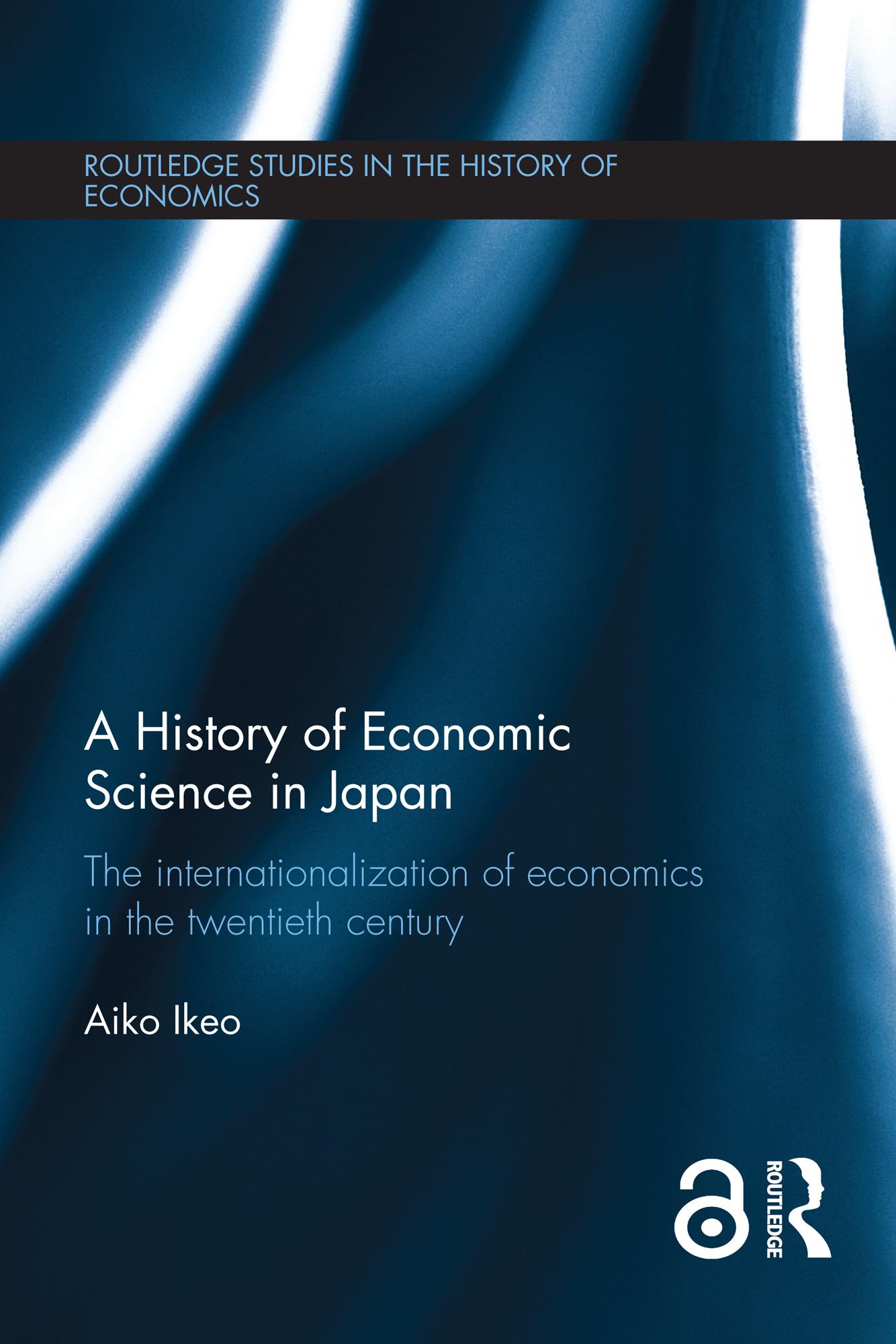
Japanese economists began publishing scientific papers in renowned journals including Econometrica in the 1950s and had made their significant contributions to the sophistication of general equilibrium analysis by intensive use of a variety of mathematical instruments. They had contributed significantly to the transformation of neoclassical economics. This book examines how it became possible for Japanese economists to do so by shedding light on the "professional" discussion of the international gold standard and parity policies in the early twentieth century, the acceptance of "mathematical economics" in the following period, the impact of establishment of the Econometric Society (1930), and the swift distribution of theory-oriented economics journals since 1930.
This book also includes topics on the historical research of the Japanese foundations of modern economics, the transformation of the economics of Keynes into Keynesian economics, Japanese developments in econometrics, and Martin Bronfenbrenner's visit to Japan in the post-WWII period.
This book provides insight into the economic research done by Japanese scholars in the international context. It traces how, during the period 1900-1960, economics was harmonized with economics and a standard economics was re-shaped on the basis of mathematics thanks to economists' appetite for rigor and will help to contribute to existing literature.
Payez facilement par carte, Klarna, Apple Pay ou Google Pay. Pas satisfait ? Vous avez toujours une garantie de remboursement de 14 jours. En savoir plus dans nos conditions. Si vous avez des questions, envoyez-nous un e-mail à hello@memmo.org.
Memmo facilite tes études, où que tu sois dans le monde. On rassemble tes manuels de cours et des outils d'étude intelligents au même endroit : résumés, quiz, podcasts et flashcards. Et il y a Ted, ton compagnon d'étude qui répond à toutes tes questions. Plus de 50 000 étudiants étudient déjà ici – conçu pour t'aider à apprendre plus vite et à moins stresser.