
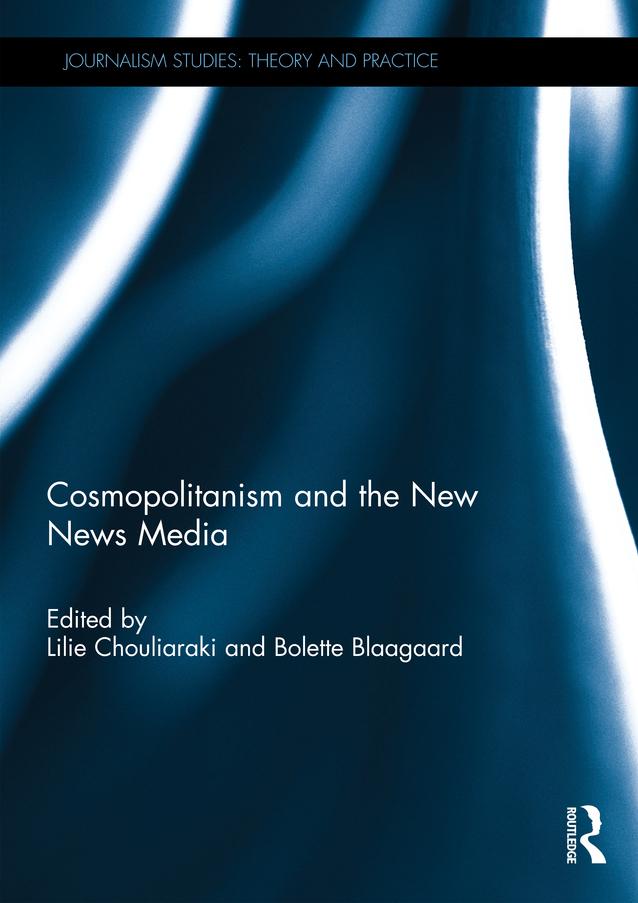
The Arab Spring, the Occupy Wall Street movement and the Haiti earthquake are only some of the recent examples of the power of new media to transform journalism. Some celebrate this power as a new cosmopolitanism that challenges the traditional boundaries of foreign reporting, yet others fear that the new media simply reproduce old power relations in new ways. It is this important controversy around the role of new media in shaping a cosmopolitan journalism that offers the starting point of this book.
By bringing together an impressive range of leading theorists in the field of journalism and media studies, this collection insightfully explores how Twitter, Facebook, Flickr and YouTube are taking the voice of ordinary citizens into the forefront of mainstream journalism and how, in so doing, they give shape to new public conceptions of authenticity and solidarity.
This collection is directed towards a readership of students and scholars in media and communications, digital and information studies, journalism, sociology as well as other social sciences that engage with the role of new media in shaping contemporary social life.
This book was originally published as a special issue of Journalism Studies.
Payez facilement par carte, Klarna, Apple Pay ou Google Pay. Pas satisfait ? Vous avez toujours une garantie de remboursement de 14 jours. En savoir plus dans nos conditions. Si vous avez des questions, envoyez-nous un e-mail à hello@memmo.org.
Memmo facilite tes études, où que tu sois dans le monde. On rassemble tes manuels de cours et des outils d'étude intelligents au même endroit : résumés, quiz, podcasts et flashcards. Et il y a Ted, ton compagnon d'étude qui répond à toutes tes questions. Plus de 50 000 étudiants étudient déjà ici – conçu pour t'aider à apprendre plus vite et à moins stresser.