
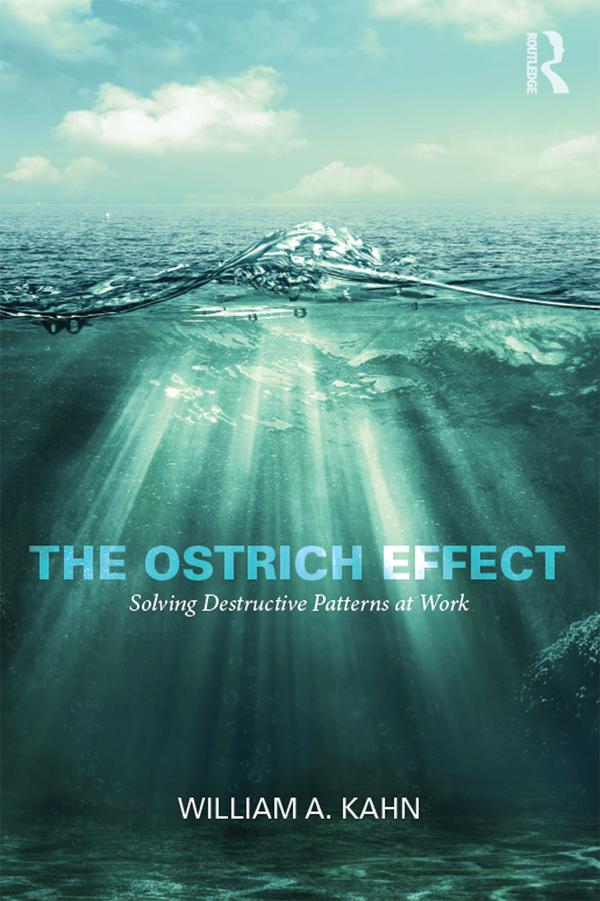
The Ostrich Effect goes beyond the typical "how to" approach of most books that deal with difficult conversations at work. It aims to teach the reader what conversations to have, and when to have them, in order to solve destructive problems that occur in the workplace.
Like the proverbial ostrich with its head in the sand, people often avoid confronting small issues at work, but, if avoided, these issues will escalate and inevitably wreak havoc. Drawing on a combination of social science research and Kahn’s practical experience as an organizational psychologist, the book examines the micro-processes that underlie the way in which these problems develop and flourish. These micro-processes are tiny, fleeting, and hardly noticeable, but when they are identified, something startling becomes apparent: there is a predictable pattern to this escalation. The book uses a variety of examples to demonstrate this pattern across a range of organizations and industries, and offers a toolkit to help guide the reader in resolving people problems at work. The toolkit focuses not on changing others, but on changing how we interact with others—our own behavior is the most powerful force for change that we have.
The ostrich remains the symbol of those of us who foolishly ignore our problems while hoping that they will magically disappear. By identifying this "ostrich effect", the reader is empowered to re-frame and neutralize its impact.
Payez facilement par carte, Klarna, Apple Pay ou Google Pay. Pas satisfait ? Vous avez toujours une garantie de remboursement de 14 jours. En savoir plus dans nos conditions. Si vous avez des questions, envoyez-nous un e-mail à hello@memmo.org.
Memmo facilite tes études, où que tu sois dans le monde. On rassemble tes manuels de cours et des outils d'étude intelligents au même endroit : résumés, quiz, podcasts et flashcards. Et il y a Ted, ton compagnon d'étude qui répond à toutes tes questions. Plus de 50 000 étudiants étudient déjà ici – conçu pour t'aider à apprendre plus vite et à moins stresser.