
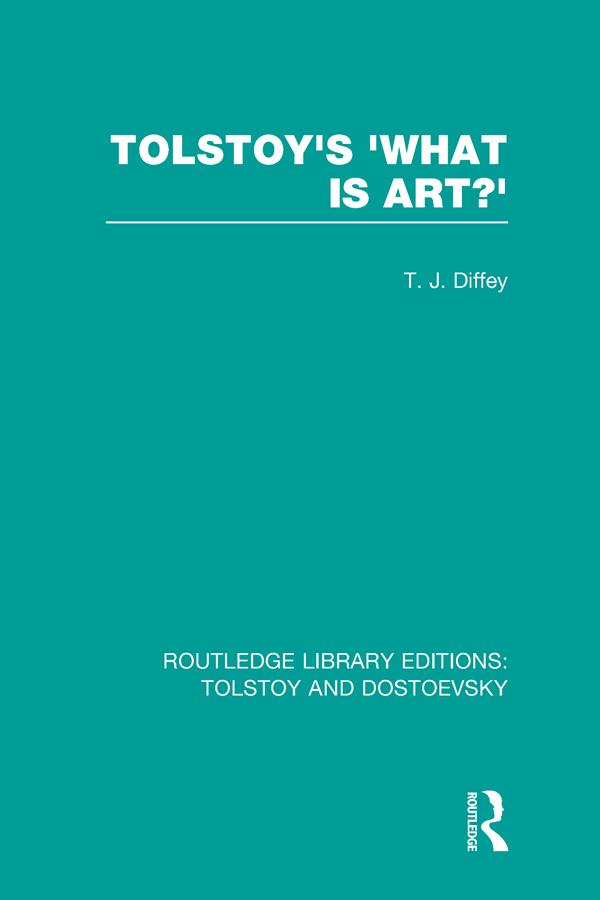
With its demand that works of art be judged according to the their morally didactic content, Tolstoy’s reviled aesthetics has seemed to exclude from the canon far too many works widely accepted as masterpieces, including Shakespeare and Beethoven.
This book, first published in 1985, argues that these are not mere oversights on the part of Tolstoy: he knew full well the consequences of his line of reasoning. The author contends that, even if we disagree with and eventually reject much of what Tolstoy concludes, his account of the nature and purpose of art is nevertheless worth consideration.
Diffey’s argument by no means accepts all of ‘What is Art?’, but by suggesting that the work is best interpreted as a counterpoint to the amoral aestheticism prevalent in Russia at the time, he does much to restore it to a status deserving attention, particularly in today’s climate of extreme relativism.
Payez facilement par carte, Klarna, Apple Pay ou Google Pay. Pas satisfait ? Vous avez toujours une garantie de remboursement de 14 jours. En savoir plus dans nos conditions. Si vous avez des questions, envoyez-nous un e-mail à hello@memmo.org.
Memmo facilite tes études, où que tu sois dans le monde. On rassemble tes manuels de cours et des outils d'étude intelligents au même endroit : résumés, quiz, podcasts et flashcards. Et il y a Ted, ton compagnon d'étude qui répond à toutes tes questions. Plus de 50 000 étudiants étudient déjà ici – conçu pour t'aider à apprendre plus vite et à moins stresser.