
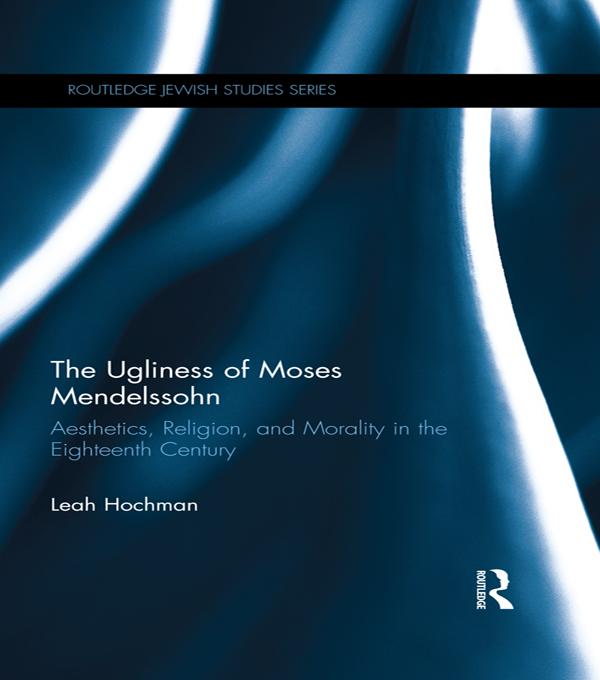
The Ugliness of Moses Mendelssohn examines the idea of ugliness through four angles: philosophical aesthetics, early anthropology, physiognomy and portraiture in the eighteenth-century.
Highlighting a theory that describes the benefit of encountering ugly objects in art and nature, eighteenth-century German Jewish philosopher Moses Mendelssohn recasts ugliness as a positive force for moral education and social progress. According to his theory, ugly objects cause us to think more and thus exercise—and expand—our mental abilities. Known as ugly himself, he was nevertheless portrayed in portraits and in physiognomy as an image of wisdom, gentility, and tolerance. That seeming contradiction—an ugly object (Mendelssohn) made beautiful—illustrates his theory’s possibility: ugliness itself is a positive, even redeeming characteristic of great opportunity.
Presenting a novel approach to eighteenth century aesthetics, this book will be of interest to students and scholars in the fields of Jewish Studies, Philosophy and History.
Payez facilement par carte, Klarna, Apple Pay ou Google Pay. Pas satisfait ? Vous avez toujours une garantie de remboursement de 14 jours. En savoir plus dans nos conditions. Si vous avez des questions, envoyez-nous un e-mail à hello@memmo.org.
Memmo facilite tes études, où que tu sois dans le monde. On rassemble tes manuels de cours et des outils d'étude intelligents au même endroit : résumés, quiz, podcasts et flashcards. Et il y a Ted, ton compagnon d'étude qui répond à toutes tes questions. Plus de 50 000 étudiants étudient déjà ici – conçu pour t'aider à apprendre plus vite et à moins stresser.