
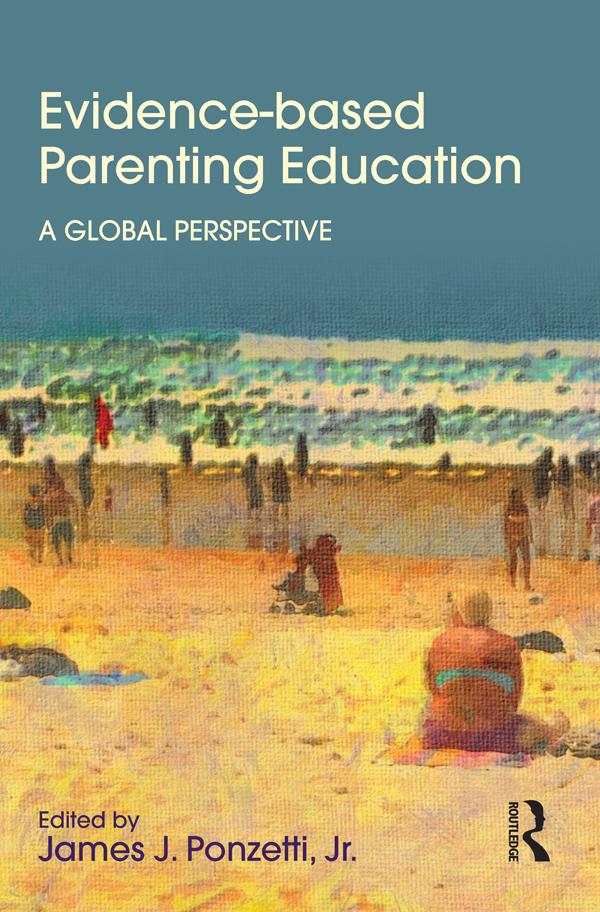
This is the first book to provide a multidisciplinary, critical, and global overview of evidence-based parenting education (PEd) programs. Readers are introduced to the best practices for designing, implementing, and evaluating effective PEd programs in order to teach clients how to be effective parents. Noted contributors from various disciplines examine evidence –based programs from the U.S., Canada, Europe, Asia, Australia, as well as web-based alternatives. The best practices used in a number of venues are explored, often by the developers themselves. Examples and discussion questions encourage application of the material. Critical guidance for those who wish to design, implement, and evaluate PEd programs in various settings is provided.
All chapters feature learning goals, an introduction, conclusion, key points, discussion questions, and additional resources. In addition to these elements, chapters in Part III follow a consistent structure so readers can easily compare programs—theoretical foundations and history, needs assessment and target audience, program goals & objectives, curriculum issues, cultural Implications, evidence-based research and evaluation, and professional preparation and training issues. The editor has taught parenting and family life education courses for years. This book reviews the key information that his students needed to become competent professionals.
Highlights of the book’s coverage include:
- Comprehensive summary of evidence-based PEd training programs in one volume.
- Prepares readers for professional practice as a Certified Family Life Educator (CFLE) by highlighting the fundamentals of developing and evaluating PEd programs.
- Exposes readers to models of parenting education from around the world.
The book opens with a historical overview of PEd development. It is followed by 20 chapters divided in four parts. The initial six chapters focus on fundamentals of parenting education --program design, implementation, evaluation, the role of mediators and moderators, as well as the U.S. Cooperative Extension Parent Framework. The three chapters in Part II review the latest status of parenting education in Europe, Asia, and web-based alternatives. Part III presents ten stellar, evidence-based parenting programs offered around the world. In addition to the learning goals, introduction, conclusion, key points, discussion questions, and additional resources that are found in all chapters, those in Part III also consider theoretical foundations and history, needs assessment and target audience, program goals & objectives, curriculum issues, cultural Implications, evidence based research and evaluation, and professional preparation and training issues. Part IV reviews future directions.
Ideal for advanced undergraduate or graduate courses in parent education, parent-child relations, parenting, early childhood or family life education, family therapy, and home, school, and community services taught in human development and family studies, psychology, social work, sociology, education, nursing, and more, the book also serves as a resource for practitioners, counselors, clergy members, and policy makers interested in evidence based PEd programs or those seeking to become CFLEs or Parent Educators.
Payez facilement par carte, Klarna, Apple Pay ou Google Pay. Pas satisfait ? Vous avez toujours une garantie de remboursement de 14 jours. En savoir plus dans nos conditions. Si vous avez des questions, envoyez-nous un e-mail à hello@memmo.org.
Memmo facilite tes études, où que tu sois dans le monde. On rassemble tes manuels de cours et des outils d'étude intelligents au même endroit : résumés, quiz, podcasts et flashcards. Et il y a Ted, ton compagnon d'étude qui répond à toutes tes questions. Plus de 50 000 étudiants étudient déjà ici – conçu pour t'aider à apprendre plus vite et à moins stresser.