
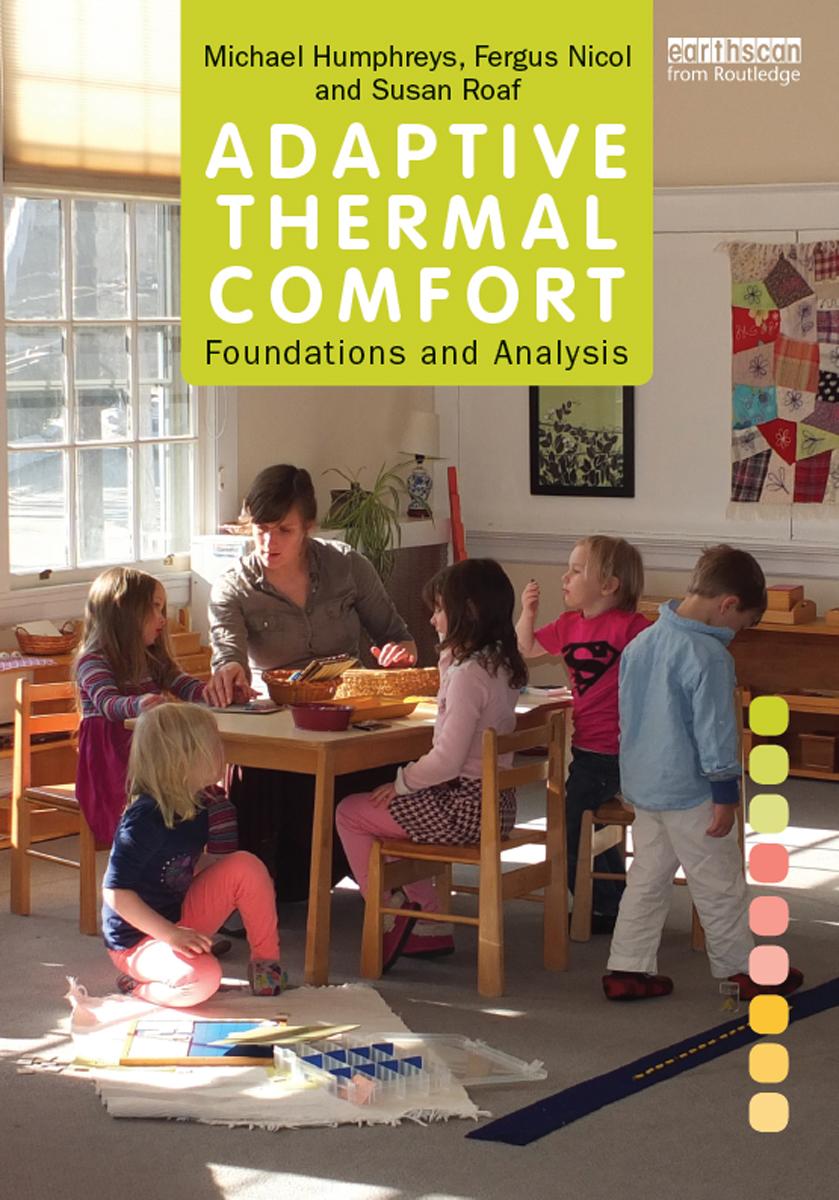
There has been widespread dissatisfaction with accepted models for predicting the conditions that people will find thermally comfortable in buildings. These models require knowledge about clothing and activity, but can give little guidance on how to quantify them in any future situation. This has forced designers to make assumptions about people’s future behaviour based on very little information and, as a result, encouraged static design indoor temperatures.
This book is the second in a three volume set covering all aspects of Adaptive Thermal Comfort. The first part narrates the development of the adaptive approach to thermal comfort from its early beginnings in the 1960s. It discusses recent work in the field and suggests ways in which it can be developed and modelled. Such models can be used to set dynamic, interactive standards for thermal comfort which will help overcome the problems inherited from the past. The second part of the volume engages with the practical and theoretical problems encountered in field studies and in their statistical analysis, providing guidance towards their resolution, so that valid conclusions may be drawn from such studies.
Payez facilement par carte, Klarna, Apple Pay ou Google Pay. Pas satisfait ? Vous avez toujours une garantie de remboursement de 14 jours. En savoir plus dans nos conditions. Si vous avez des questions, envoyez-nous un e-mail à hello@memmo.org.
Memmo facilite tes études, où que tu sois dans le monde. On rassemble tes manuels de cours et des outils d'étude intelligents au même endroit : résumés, quiz, podcasts et flashcards. Et il y a Ted, ton compagnon d'étude qui répond à toutes tes questions. Plus de 50 000 étudiants étudient déjà ici – conçu pour t'aider à apprendre plus vite et à moins stresser.