
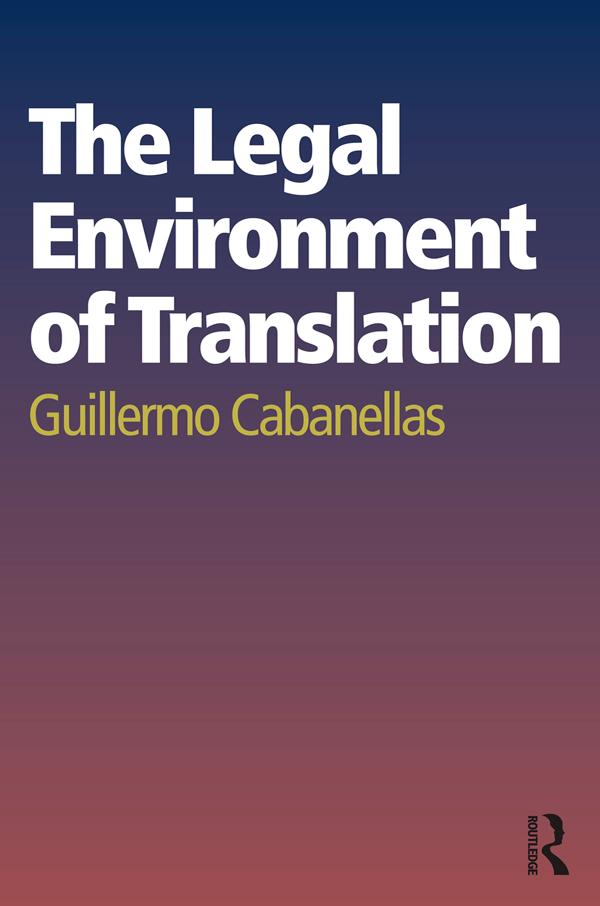
Translation is subject to a complex and unique set of legal rules that govern its various practical and intellectual aspects. These rules derive from very different legal areas, such as intellectual property and labour law. While useful from a strictly legal point of view, the heterogeneity of sources operates as a major hurdle in terms of understanding the overall legal framework within which translation operates.
This book offers a general overview of the legal rules applicable to different aspects of translation, allowing translators and other interested parties to form a broad and coherent picture of the rules applicable in this area. It draws on the provisions of the main legal systems of the world, as well as the basic international agreements relevant in this area, thus offering both a comparative perspective of the legal issues involved and a guide to relevant national legal rules. In addition to a description and analysis of the legal issues and rules involved, the book also presents hypothetical cases, with a discussion of the problems they pose and possible solutions. It explains the theoretical structure of the rules under discussion as well as their practical implications.
The language and methodology of the book are sufficiently accessible to allow lawyers, translators and those who require translation work but do not have a formal legal background to follow the arguments presented.
Payez facilement par carte, Klarna, Apple Pay ou Google Pay. Pas satisfait ? Vous avez toujours une garantie de remboursement de 14 jours. En savoir plus dans nos conditions. Si vous avez des questions, envoyez-nous un e-mail à hello@memmo.org.
Memmo facilite tes études, où que tu sois dans le monde. On rassemble tes manuels de cours et des outils d'étude intelligents au même endroit : résumés, quiz, podcasts et flashcards. Et il y a Ted, ton compagnon d'étude qui répond à toutes tes questions. Plus de 50 000 étudiants étudient déjà ici – conçu pour t'aider à apprendre plus vite et à moins stresser.