
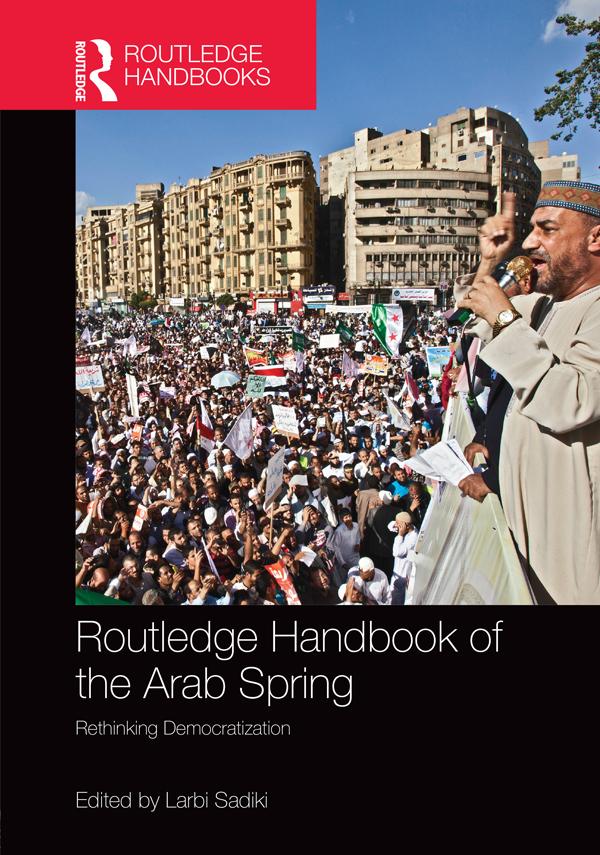
The self-immolation of Mohammed Bouazizi in Tunisia in December 2010 heralded the arrival of the ‘Arab Spring,’ a startling, yet not unprecedented, era of profound social and political upheaval.
The meme of the Arab Spring is characterised by bottom-up change, or the lack thereof, and its effects are still unfurling today. The Routledge Handbook of the Arab Spring seeks to provide a departure point for ongoing discussion of a fluid phenomenon on a plethora of topics, including:
- Contexts and contests of democratisation
- The sweep of the Arab Spring
- Egypt
- Women and the Arab Spring
- Agents of change and the technology of protest
- Impact of the Arab Spring in the wider Middle East and further afield
Collating a wide array of viewpoints, specialisms, biases, and degrees of proximity and distance from events that shook the Arab world to its core, the Handbook is written with the reader in mind, to provide students, practitioners, diplomats, policy-makers and lay readers with contextualization and knowledge, and to set the stage for further discussion of the Arab Spring.
Payez facilement par carte, Klarna, Apple Pay ou Google Pay. Pas satisfait ? Vous avez toujours une garantie de remboursement de 14 jours. En savoir plus dans nos conditions. Si vous avez des questions, envoyez-nous un e-mail à hello@memmo.org.
Memmo facilite tes études, où que tu sois dans le monde. On rassemble tes manuels de cours et des outils d'étude intelligents au même endroit : résumés, quiz, podcasts et flashcards. Et il y a Ted, ton compagnon d'étude qui répond à toutes tes questions. Plus de 50 000 étudiants étudient déjà ici – conçu pour t'aider à apprendre plus vite et à moins stresser.