
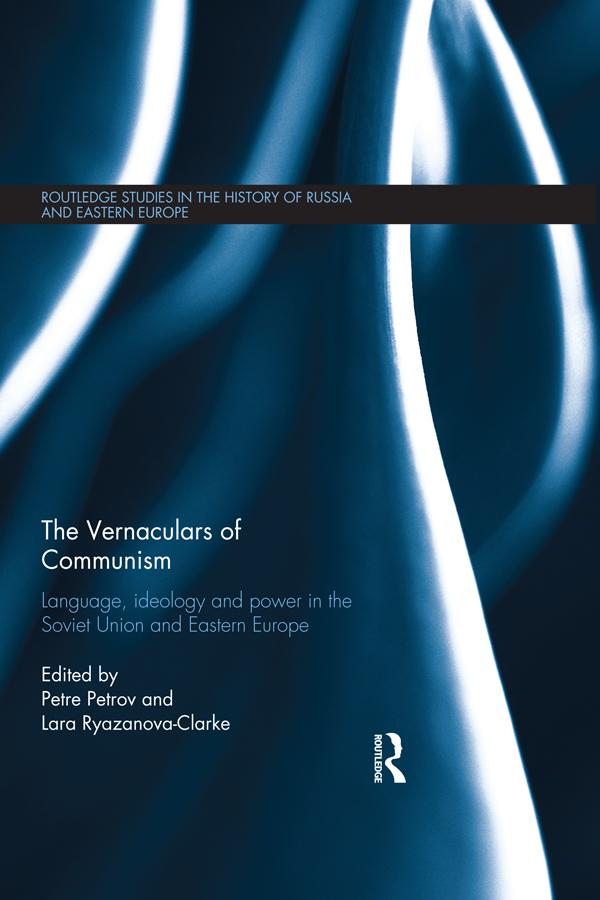
The political revolutions which established state socialism in the Soviet Union and Eastern Europe were accompanied by revolutions in the word, as the communist project implied not only remaking the world but also renaming it. As new institutions, social roles, rituals and behaviours emerged, so did language practices that designated, articulated and performed these phenomena. This book examines the use of communist language in the Stalinist and post-Stalinist periods. It goes beyond characterising this linguistic variety as crude "newspeak", showing how official language was much more complex – the medium through which important political-ideological messages were elaborated, transmitted and also contested, revealing contradictions, discursive cleavages and performative variations. The book examines the subject comparatively across a range of East European countries besides the Soviet Union, and draws on perspectives from a range of scholarly disciplines – sociolinguistics, anthropology, literary and cultural studies, historiography, and translation studies.
Petre Petrov is an Assistant Professor in the Department of Slavic Languages and Literatures at the University of Texas at Austin.
Lara Ryazanova-Clarke is Head of Russian and Academic Director of the Princess Dashkova Russia Centre in the School of Literatures, Languages and Cultures at the University of Edinburgh.
Payez facilement par carte, Klarna, Apple Pay ou Google Pay. Pas satisfait ? Vous avez toujours une garantie de remboursement de 14 jours. En savoir plus dans nos conditions. Si vous avez des questions, envoyez-nous un e-mail à hello@memmo.org.
Memmo facilite tes études, où que tu sois dans le monde. On rassemble tes manuels de cours et des outils d'étude intelligents au même endroit : résumés, quiz, podcasts et flashcards. Et il y a Ted, ton compagnon d'étude qui répond à toutes tes questions. Plus de 50 000 étudiants étudient déjà ici – conçu pour t'aider à apprendre plus vite et à moins stresser.