
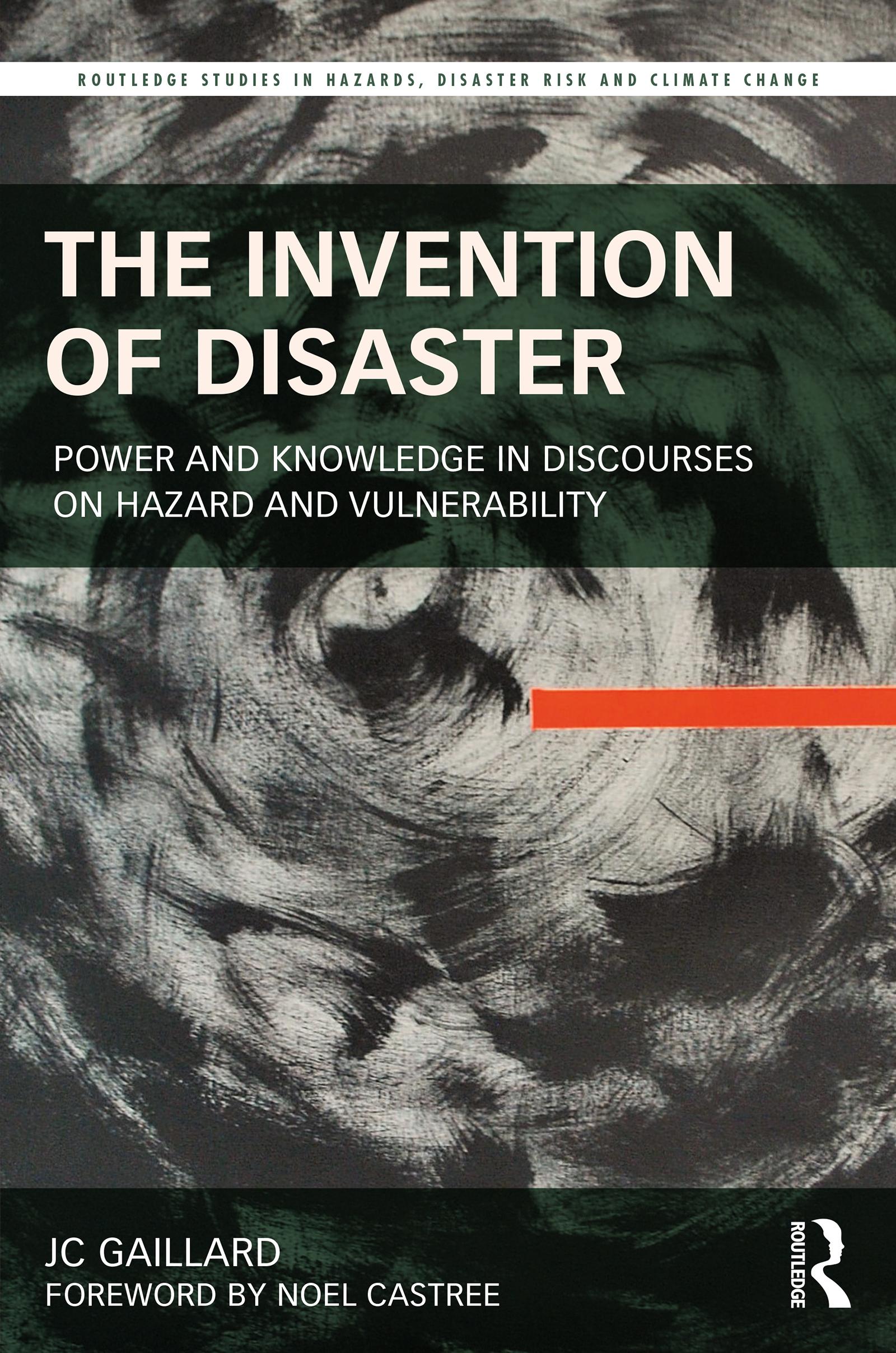
This theoretical contribution argues that the domination of Western knowledge in disaster scholarship has allowed normative policies and practices of disaster risk reduction to be imposed all over the world. It takes a postcolonial approach to unpack why scholars claim that disasters are social constructs while offering little but theories, concepts and methods supposed to be universal in understanding the unique and diverse experiences of millions of people across very different cultures. It further challenges forms of governments inherited from the Enlightenment that have been rolled out as standard and ultimate solutions to reduce the risk of disaster. Ultimately, the book encourages the emergence of a more diverse set of world views/senses and ways of knowing for both studying disasters and informing policy and practice of disaster risk reduction. Such pluralism is essential to better reflect local realities of what disasters actually are around the world.
This book is an essential read for scholars and postgraduate students interested in disaster studies as well as policy-makers and practitioners of disaster risk reduction.
Payez facilement par carte, Klarna, Apple Pay ou Google Pay. Pas satisfait ? Vous avez toujours une garantie de remboursement de 14 jours. En savoir plus dans nos conditions. Si vous avez des questions, envoyez-nous un e-mail à hello@memmo.org.
Memmo facilite tes études, où que tu sois dans le monde. On rassemble tes manuels de cours et des outils d'étude intelligents au même endroit : résumés, quiz, podcasts et flashcards. Et il y a Ted, ton compagnon d'étude qui répond à toutes tes questions. Plus de 50 000 étudiants étudient déjà ici – conçu pour t'aider à apprendre plus vite et à moins stresser.