
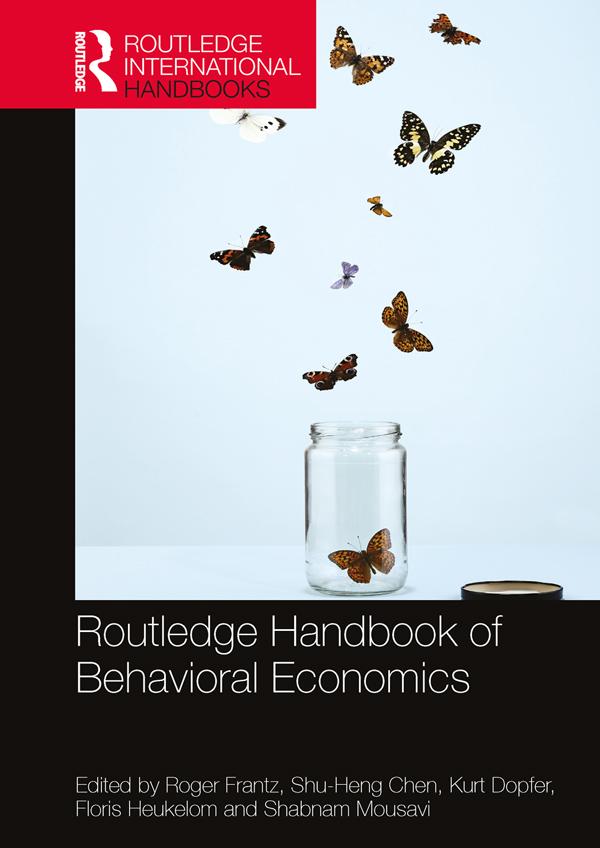
There is no doubt that behavioral economics is becoming a dominant lens through which we think about economics. Behavioral economics is not a single school of thought but representative of a range of approaches, and uniquely, this volume presents an overview of them.
The wide spectrum of international contributors each provides an exploration of a central approach, aspect or topic in behavorial economics. Taken together, the whole volume provides a comprehensive overview of the subject which considers both key developments and future possibilities.
Part One presents several different approaches to behavioural economics, including George Katona, Ken Boulding, Harvey Leibenstein, Vernon Smith, Herbert Simon, Gerd Gigerenzer, Daniel Kahneman, and Richard Thaler. This section looks at the origins and development of behavioral economics and compares and contrasts the work of these scholars who have been so influential in making this area so prominent. Part Two presents applications of behavioural economics including nudging; heuristics; emotions and morality; behavioural political economy, education, and economic innovation.
The Routledge Handbook of Behavioral Economics is ideal for advanced economics students and faculty who are looking for a complete state-of-the-art overview of this dynamic field.
Payez facilement par carte, Klarna, Apple Pay ou Google Pay. Pas satisfait ? Vous avez toujours une garantie de remboursement de 14 jours. En savoir plus dans nos conditions. Si vous avez des questions, envoyez-nous un e-mail à hello@memmo.org.
Memmo facilite tes études, où que tu sois dans le monde. On rassemble tes manuels de cours et des outils d'étude intelligents au même endroit : résumés, quiz, podcasts et flashcards. Et il y a Ted, ton compagnon d'étude qui répond à toutes tes questions. Plus de 50 000 étudiants étudient déjà ici – conçu pour t'aider à apprendre plus vite et à moins stresser.