
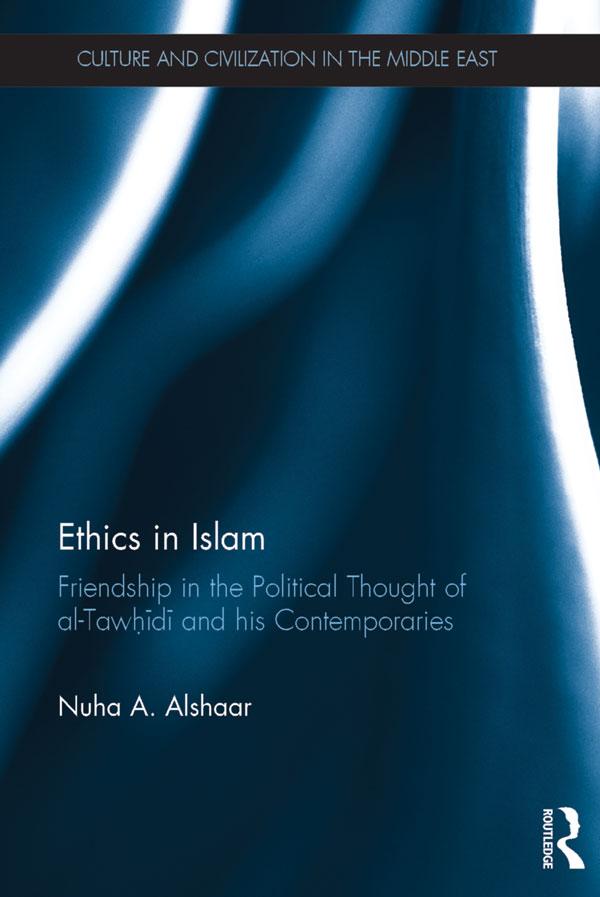
Offering a new reading of Islamic ethical and political thought in the Būyid period (334-440/946-1048), this book focuses particularly on the philosopher Abū Hayyān al-Tawhīdī who lived in Baghdad and what is now western Iran.
Ethics in Islam provides the first major treatment of al-Tawhīdī's ethics, political thought, and social idealism, investigating the complex influences that shaped this thought and especially his concept of friendship, which is analysed in the unique context of Būyid society. Al-Tawhīdī revives the value of friendship in politics. He introduces it as the best way to reform social and political order and as a means to the good life, to restrain passion and self-interest, to bring about cooperation and promote reason, and for action in opposition to religious zeal. Instead of seeing him as alienated from society, supposedly rejecting traditional Muslim beliefs, this book places him in his historical and intellectual contexts, and shows that while he was original in many ways, his outlook was firmly rooted in the Islamic culture in which he was educated.
Contributing to modern discussions of Islam and political ethics, this book is of interest to scholars and researchers of political philosophy, comparative ethical thought and Islamic studies.
Payez facilement par carte, Klarna, Apple Pay ou Google Pay. Pas satisfait ? Vous avez toujours une garantie de remboursement de 14 jours. En savoir plus dans nos conditions. Si vous avez des questions, envoyez-nous un e-mail à hello@memmo.org.
Memmo facilite tes études, où que tu sois dans le monde. On rassemble tes manuels de cours et des outils d'étude intelligents au même endroit : résumés, quiz, podcasts et flashcards. Et il y a Ted, ton compagnon d'étude qui répond à toutes tes questions. Plus de 50 000 étudiants étudient déjà ici – conçu pour t'aider à apprendre plus vite et à moins stresser.