
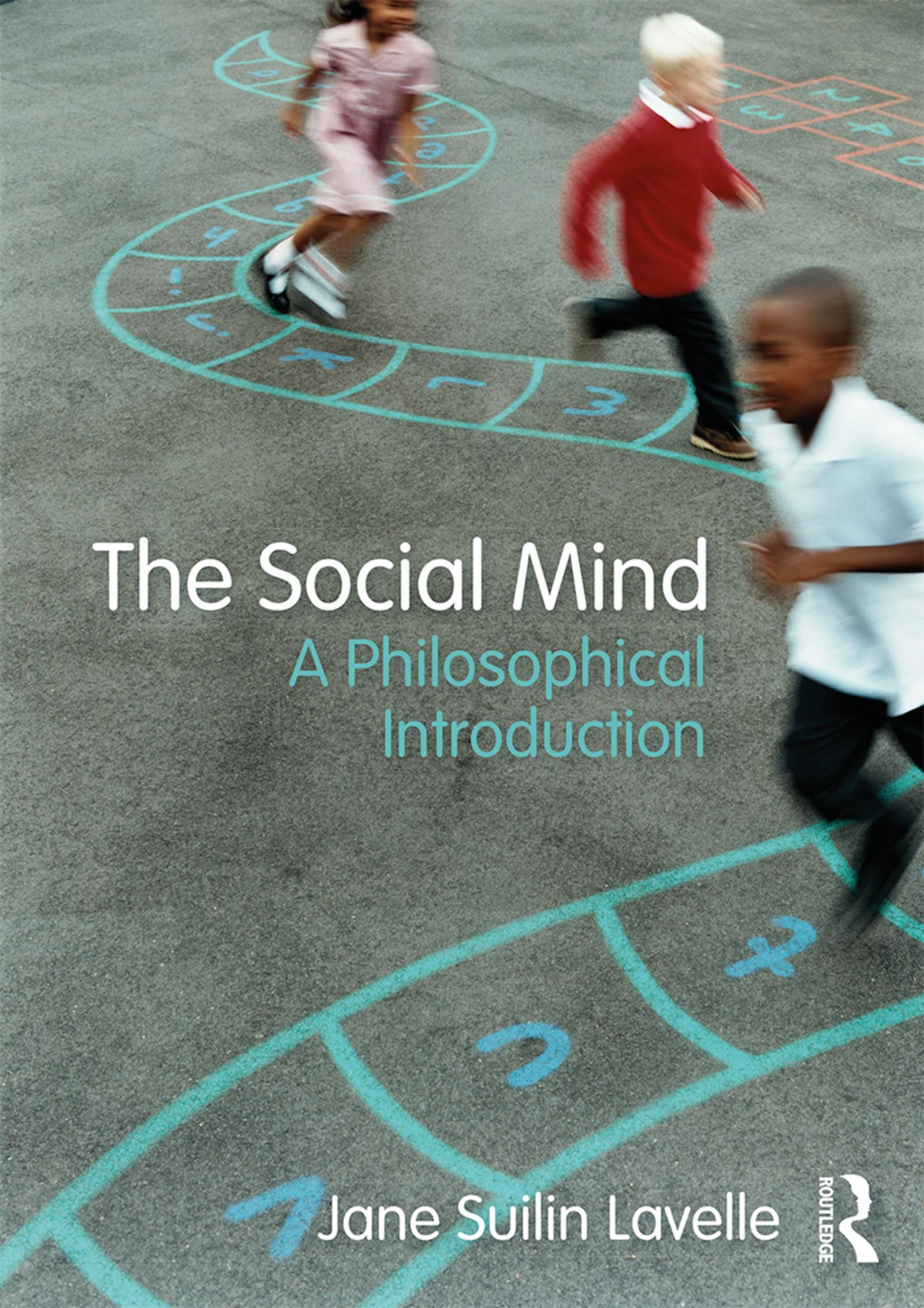
We spend a lot of time thinking about other people: their motivations, what they are thinking, why they want particular things. Sometimes we are aware of it, but it often occurs without conscious thought, and we can respond appropriately to other people's thoughts in a diverse range of situations.
The Social Mind: A Philosophical Introduction examines the cognitive capacities that facilitate this amazing ability. It explains and critiques key philosophical theories about how we think about other people's minds, measuring them against empirical findings from neuroscience, anthropology, developmental psychology and cognitive ethology. Some of the fascinating questions addressed include:
- How do we think about other people's minds? Do we put ourselves in another's shoes to work out what they think?
- When do we need to think about another person's thoughts?
- What kinds of thoughts do we attribute to others? Are they propositional attitudes like beliefs and desires as analytic philosophers have often assumed, or could they be something else?
- What sorts of neural mechanisms underlie our ability to think about other people's thoughts?
- How is the ability to think about other minds different for individuals on the autism Spectrum?
- Is a preoccupation with other people's thoughts a Western phenomenon or is it found in all cultures?
- How do children learn to think about other minds?
- Can non-human animals think about other minds?
These questions are applied to case studies throughout the book, including mirror neurons, recent research on infant social cognition, false belief tasks, and cross-cultural studies.
Covering complex interdisciplinary debates in an accessible and clear way, with chapter summaries, annotated further reading, and a glossary, The Social Mind: A Philosophical Introduction is an ideal entry point into this fast-moving and exciting field. It is essential reading for students of philosophy of mind and psychology, and also of interest to those in related subjects such as cognitive science, social and developmental psychology, and anthropology.
Payez facilement par carte, Klarna, Apple Pay ou Google Pay. Pas satisfait ? Vous avez toujours une garantie de remboursement de 14 jours. En savoir plus dans nos conditions. Si vous avez des questions, envoyez-nous un e-mail à hello@memmo.org.
Memmo facilite tes études, où que tu sois dans le monde. On rassemble tes manuels de cours et des outils d'étude intelligents au même endroit : résumés, quiz, podcasts et flashcards. Et il y a Ted, ton compagnon d'étude qui répond à toutes tes questions. Plus de 50 000 étudiants étudient déjà ici – conçu pour t'aider à apprendre plus vite et à moins stresser.