
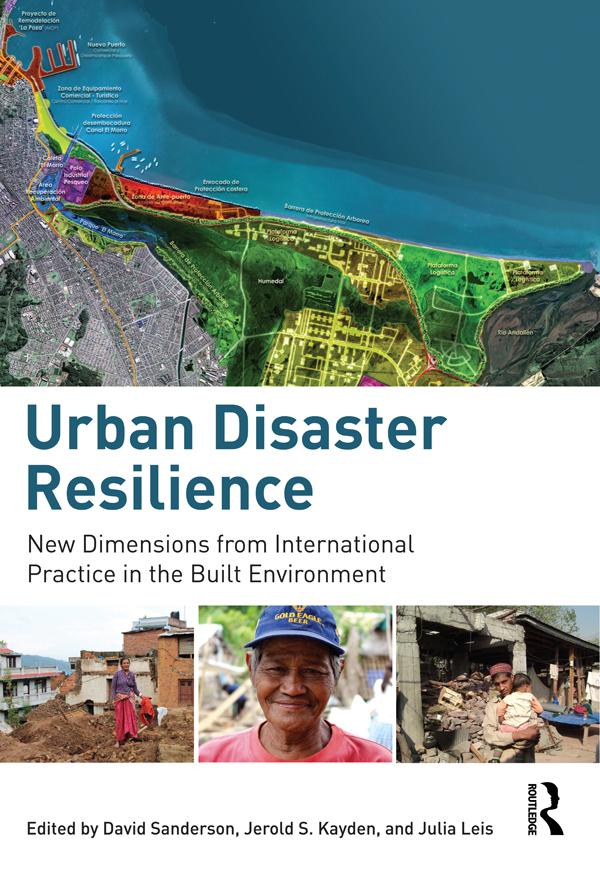
Accelerating urbanization worldwide means more urban-centered disasters. Floods, earthquakes, storms and conflicts affecting densely populated areas produce significant losses in lives, livelihoods and the built environment, especially in comparison to rural areas. Poor urban dwellers, almost always the most vulnerable, too often bear the brunt. Aid agencies and urban professionals have been slowly adapting to these new conditions, but older models and practices hinder the most effective engagements.
Drawing directly from the experiences of urban disasters in the Philippines, Chile, India, Thailand, Iraq, Haiti and Nepal, among other countries, Urban Disaster Resilience brings to light new collaborations and techniques for addressing the challenges of urban disasters in the coming years. Chapters range from country-specific case studies to more synthetic frameworks in order to promote innovative thinking and practical solutions.
Edited by David Sanderson, Jerold S. Kayden and Julia Leis, this book is a crucial read for humanitarian and disaster specialists, urban planners and designers, architects, landscape architects, housing and economic development professionals, real estate developers, private business managers and students interested in the subject, whether based in non-governmental organizations, local, state or national governments, international agencies, private firms, or the academy.
Payez facilement par carte, Klarna, Apple Pay ou Google Pay. Pas satisfait ? Vous avez toujours une garantie de remboursement de 14 jours. En savoir plus dans nos conditions. Si vous avez des questions, envoyez-nous un e-mail à hello@memmo.org.
Memmo facilite tes études, où que tu sois dans le monde. On rassemble tes manuels de cours et des outils d'étude intelligents au même endroit : résumés, quiz, podcasts et flashcards. Et il y a Ted, ton compagnon d'étude qui répond à toutes tes questions. Plus de 50 000 étudiants étudient déjà ici – conçu pour t'aider à apprendre plus vite et à moins stresser.