
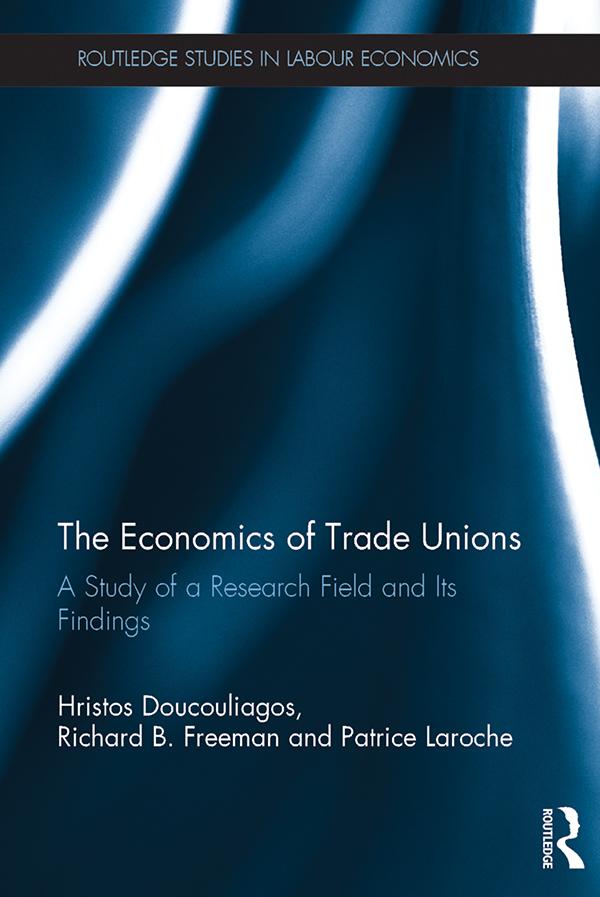
Richard B. Freeman and James L. Medoff’s now classic 1984 book What Do Unions Do? stimulated an enormous theoretical and empirical literature on the economic impact of trade unions. Trade unions continue to be a significant feature of many labor markets, particularly in developing countries, and issues of labor market regulations and labor institutions remain critically important to researchers and policy makers.
The relations between unions and management can range between cooperation and conflict; unions have powerful offsetting wage and non-wage effects that economists and other social scientists have long debated. Do the benefits of unionism exceed the costs to the economy and society writ large, or do the costs exceed the benefits? The Economics of Trade Unions offers the first comprehensive review, analysis and evaluation of the empirical literature on the microeconomic effects of trade unions using the tools of meta-regression analysis to identify and quantify the economic impact of trade unions, as well as to correct research design faults, the effects of selection bias and model misspecification.
This volume makes use of a unique dataset of hundreds of empirical studies and their reported estimates of the microeconomic impact of trade unions. Written by three authors who have been at the forefront of this research field (including the co-author of the original volume, What Do Unions Do?), this book offers an overview of a subject that is of huge importance to scholars of labor economics, industrial and employee relations, and human resource management, as well as those with an interest in meta-analysis.
Payez facilement par carte, Klarna, Apple Pay ou Google Pay. Pas satisfait ? Vous avez toujours une garantie de remboursement de 14 jours. En savoir plus dans nos conditions. Si vous avez des questions, envoyez-nous un e-mail à hello@memmo.org.
Memmo facilite tes études, où que tu sois dans le monde. On rassemble tes manuels de cours et des outils d'étude intelligents au même endroit : résumés, quiz, podcasts et flashcards. Et il y a Ted, ton compagnon d'étude qui répond à toutes tes questions. Plus de 50 000 étudiants étudient déjà ici – conçu pour t'aider à apprendre plus vite et à moins stresser.