
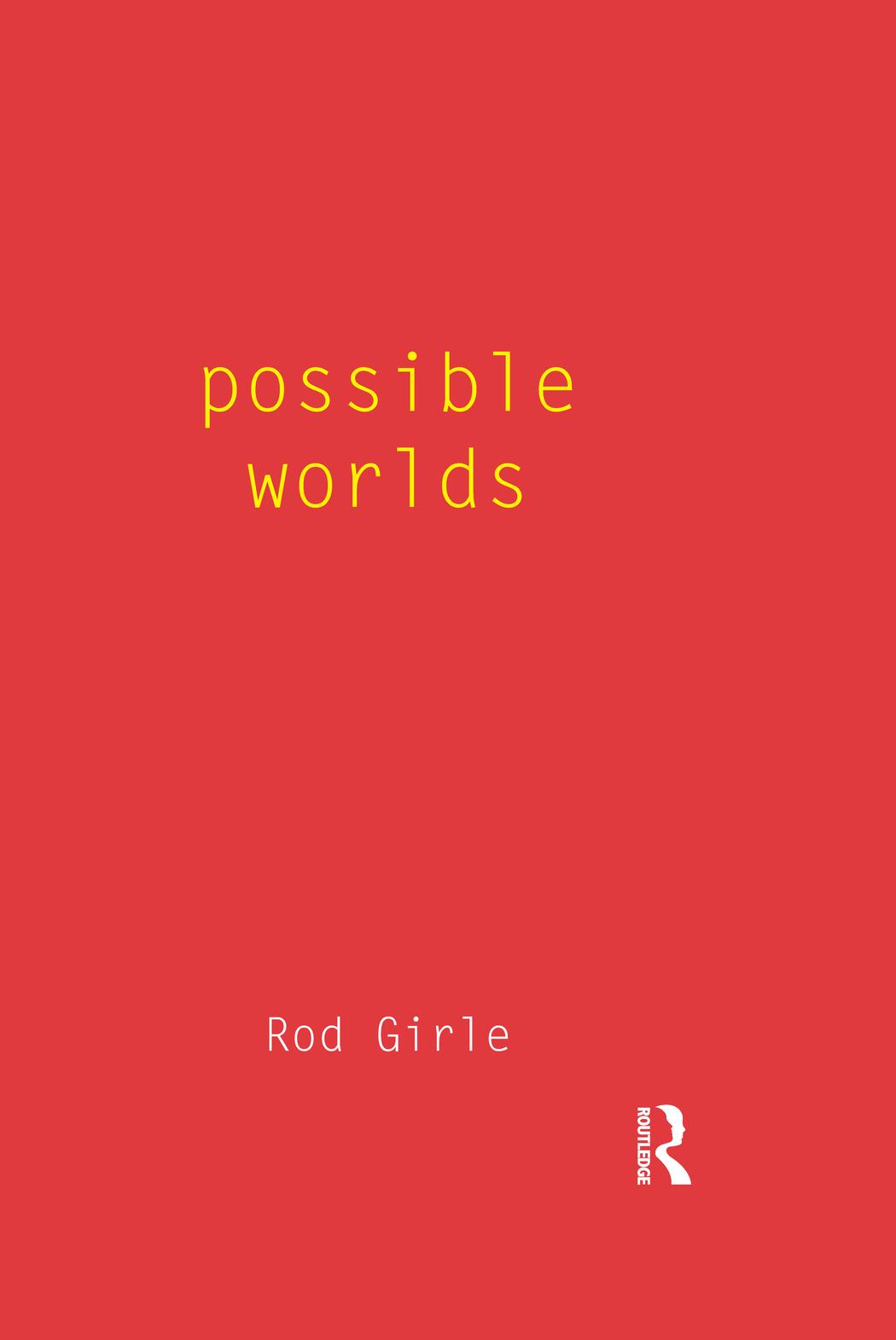
Ever since Saul Kripke and others developed a semantic interpretation for modal logic, 'possible worlds' has been a much debated issue in contemporary metaphysics. To propose the idea of a possible world that differs in some way from our actual world - for example a world where the grass is red or where no people exist - can help us to analyse and understand a wide range of philosophical concepts, such as counterfactuals, properties, modality, and of course, the notions of possibility and necessity. This book examines the ways in which possible worlds have been used as a framework for considering problems in logic and argument analysis. The book begins with a non-technical introduction to the basic ideas of modal logic in terms of Kripke's possible worlds and then moves on to a discussion of 'possible for' and 'possible that'. The central chapters examine questions of meaning, epistemic possibility, temporal logic, metaphysics, and impossibility. Girle also investigates how the idea of a possible world can be put to use in different areas of philosophy, the problems it may raise, and the benefits that can be gained.
Payez facilement par carte, Klarna, Apple Pay ou Google Pay. Pas satisfait ? Vous avez toujours une garantie de remboursement de 14 jours. En savoir plus dans nos conditions. Si vous avez des questions, envoyez-nous un e-mail à hello@memmo.org.
Memmo facilite tes études, où que tu sois dans le monde. On rassemble tes manuels de cours et des outils d'étude intelligents au même endroit : résumés, quiz, podcasts et flashcards. Et il y a Ted, ton compagnon d'étude qui répond à toutes tes questions. Plus de 50 000 étudiants étudient déjà ici – conçu pour t'aider à apprendre plus vite et à moins stresser.
Tu pourrais aussi aimer
Acheter le livre0