
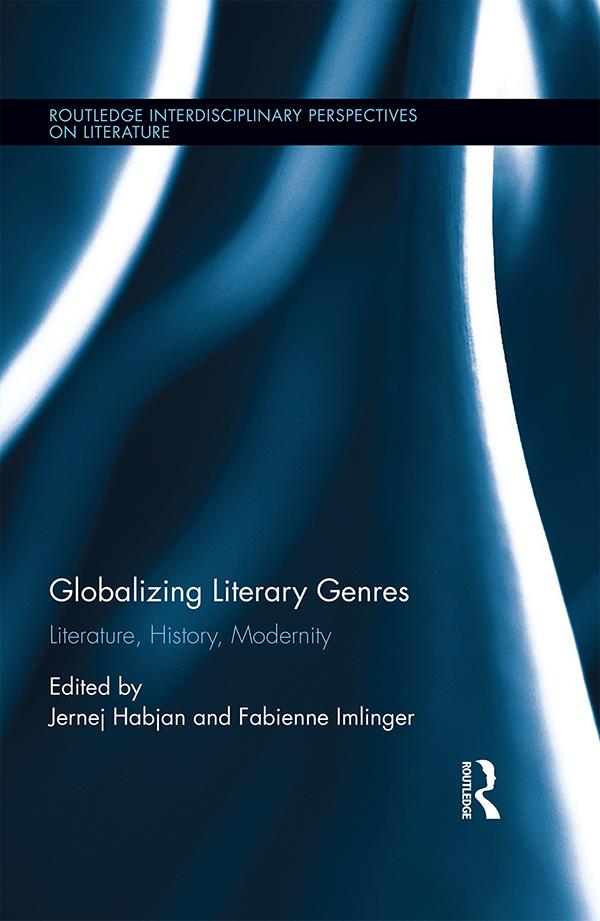
Focused on the relation between processes of globalization and literary genres, this volume intervenes in the prevalent notions of globalization, literary history, genre, and the novel. Using both close reading and world history, both literary criticism and political theory, the book is a timely intervention in the debates about world, postcolonial, and transnational literature as they have been intensified by critical globalization studies, world-systems analysis, Bourdieuan sociology, and cosmopolitanism studies. It contends that globalization, far from starting in recent decades, has a long and complex history, not unlike the history of literature itself, meaning that when we speak of globalization and literature, we in effect invoke the entire history of literature. Essays examine literary genres in relation to broader historical processes, connecting the present state of globalization to such key world-historic events as the early modern geographical and scientific explorations, the Enlightenment, the expansions of modernity in the long nineteenth and twentieth centuries, postmodernity and postcoloniality, and contemporary counter-hegemonic movements. The book offers innovative readings of the pastoral from Saint-Pierre to Carpentier; the novel in Kant and Wieland, and in Diderot and Marx; travel writing from Verne to Cortázar; sports writing in James and Kahn; entrelacement in Bolaño, Ghosh, and Soderbergh; and also the Mozambican ghost story, Indian genre fiction, "fake" autobiographies, Sephardic "language memoirs," the postcolonial Gothic, Irish "chick lit," and counter-hegemonic novels. Making important theoretical contributions to a renewed discussion about genre, especially genres of narrative fiction, this volume addresses global studies, the history of the novel, and debates over periodization and nationalism in literary history.
Payez facilement par carte, Klarna, Apple Pay ou Google Pay. Pas satisfait ? Vous avez toujours une garantie de remboursement de 14 jours. En savoir plus dans nos conditions. Si vous avez des questions, envoyez-nous un e-mail à hello@memmo.org.
Memmo facilite tes études, où que tu sois dans le monde. On rassemble tes manuels de cours et des outils d'étude intelligents au même endroit : résumés, quiz, podcasts et flashcards. Et il y a Ted, ton compagnon d'étude qui répond à toutes tes questions. Plus de 50 000 étudiants étudient déjà ici – conçu pour t'aider à apprendre plus vite et à moins stresser.