
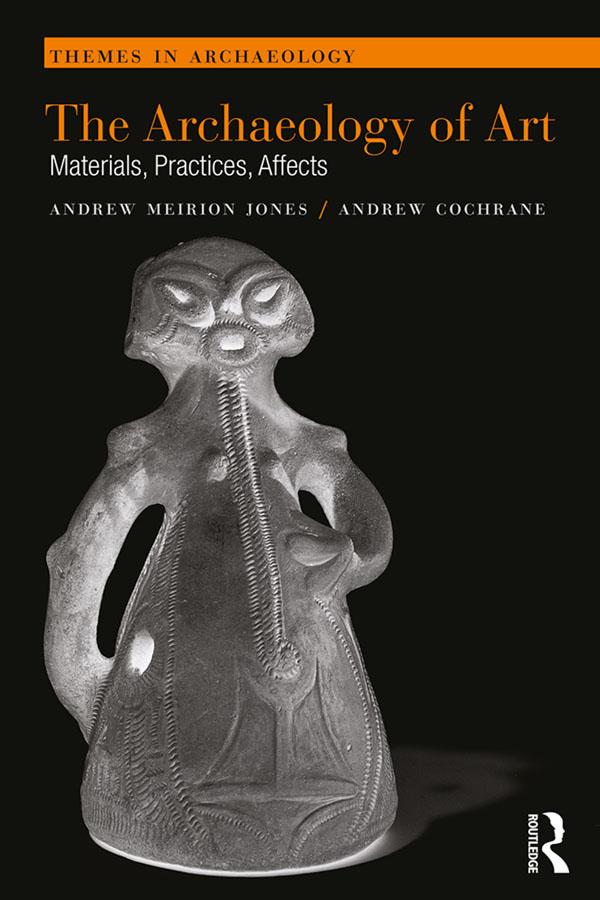
How can archaeologists interpret ancient art and images if they do not treat them as symbols or signifiers of identity?
Traditional approaches to the archaeology of art have borrowed from the history of art and the anthropology of art by focusing on iconography, meaning, communication and identity. This puts the archaeology of art at a disadvantage as an understanding of iconography and meaning requires a detailed knowledge of historical or ethnographic context unavailable to many archaeologists. Rather than playing to archaeology’s weaknesses, the authors argue that an archaeology of art should instead play to archaeology’s strength: the material character of archaeological evidence.
Using case studies - examining rock art, figurines, beadwork, murals, coffin decorations, sculpture and architecture from Europe, the Americas, Asia, Australia, and north Africa -the authors develop an understanding of the affective and effective nature of ancient art and imagery. An analysis of a series of material-based practices, from gesture and improvisation to miniaturisation and gigantism, assembly and disassembly and the use of distinctions in colour enable key concepts, such as style and meaning, to be re-imagined as affective practices. Recasting the archaeology of art as the study of affects offers a new prospectus for the study of ancient art and imagery.
Payez facilement par carte, Klarna, Apple Pay ou Google Pay. Pas satisfait ? Vous avez toujours une garantie de remboursement de 14 jours. En savoir plus dans nos conditions. Si vous avez des questions, envoyez-nous un e-mail à hello@memmo.org.
Memmo facilite tes études, où que tu sois dans le monde. On rassemble tes manuels de cours et des outils d'étude intelligents au même endroit : résumés, quiz, podcasts et flashcards. Et il y a Ted, ton compagnon d'étude qui répond à toutes tes questions. Plus de 50 000 étudiants étudient déjà ici – conçu pour t'aider à apprendre plus vite et à moins stresser.