
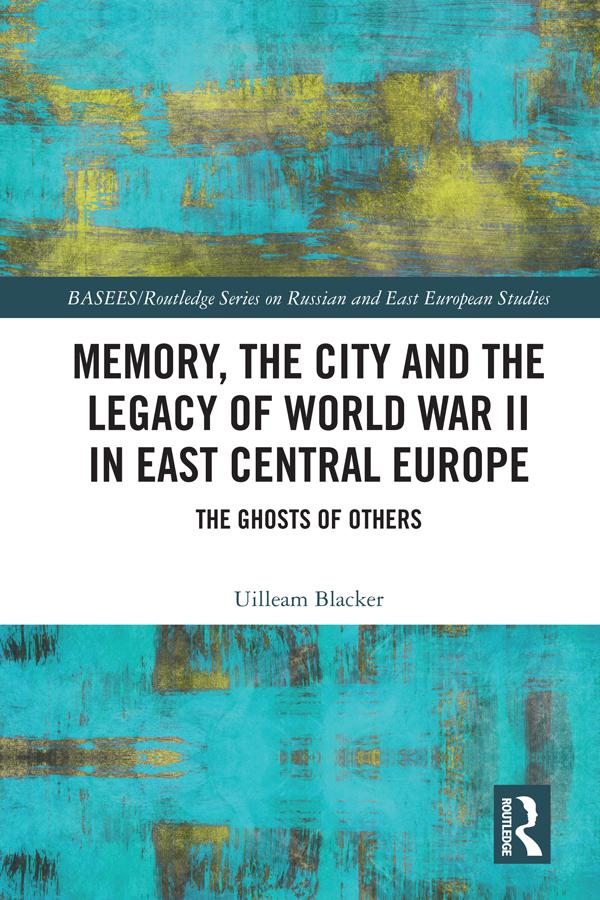
After the Second World War, millions of people across Eastern Europe, displaced as a result of wartime destruction, deportations and redrawing of state boundaries, found themselves living in cities that were filled with the traces of the foreign cultures of the former inhabitants. In the immediate post-war period these traces were not acknowledged, the new inhabitants going along with official policies of oblivion, the national narratives of new post-war regimes, and the memorializing of the victors. In time, however, and increasingly over recent decades, the former "other pasts" have been embraced and taken on board as part of local cultural memory. This book explores this interesting and increasingly important phenomenon. It examines official ideologies, popular memory, literature, film, memorialization and tourism to show how other pasts are being incorporated into local cultural memory. It relates these developments to cultural theory and argues that the relationship between urban space, cultural memory and identity in Eastern Europe is increasingly becoming a question not only of cultural politics, but also of consumption and choice, alongside a tendency towards the cosmopolitanization of memory.
Payez facilement par carte, Klarna, Apple Pay ou Google Pay. Pas satisfait ? Vous avez toujours une garantie de remboursement de 14 jours. En savoir plus dans nos conditions. Si vous avez des questions, envoyez-nous un e-mail à hello@memmo.org.
Memmo facilite tes études, où que tu sois dans le monde. On rassemble tes manuels de cours et des outils d'étude intelligents au même endroit : résumés, quiz, podcasts et flashcards. Et il y a Ted, ton compagnon d'étude qui répond à toutes tes questions. Plus de 50 000 étudiants étudient déjà ici – conçu pour t'aider à apprendre plus vite et à moins stresser.