
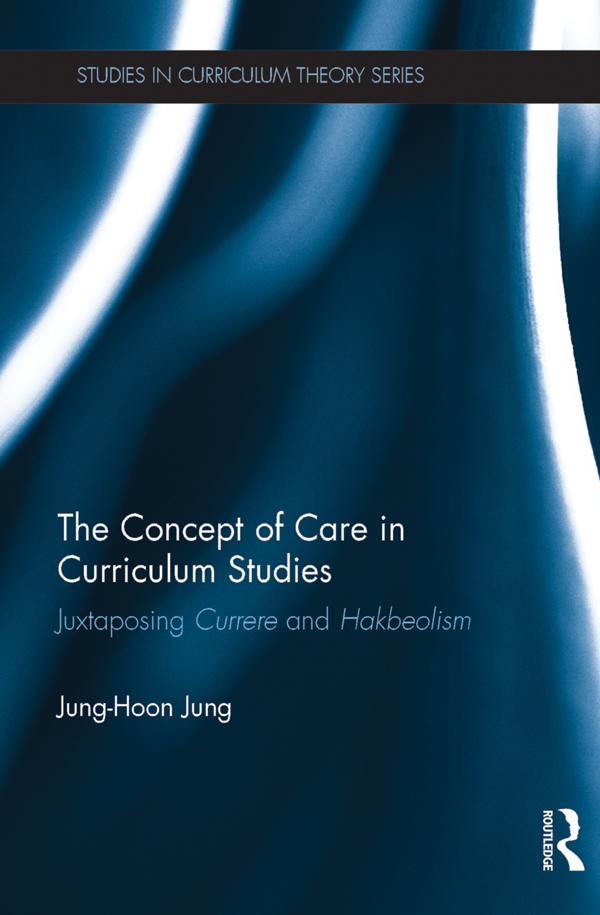
The question at the heart of the book is what might an education with self-care and care-for-others look like? Juxtaposing self-understanding through the method of currere and the historical character of hakbeolism (a concept indigenous to Korea referring to a kind of social status people achieve based on a shared academic background), this book articulates how subjective reconstruction of self in conjunction with historical study can be transformative, and how this can be extended to social change. Articulating how having one’s own standard can be a way of making one’s life a work of art, the author looks at how Korean schooling exercises coercive care, disconfirmation, and the "whip of love" for the children’s own good. Emphasis is given to the internalized status of these practices in both students and teachers and to teachers’ and parents’ culpability not only in exercising but also in reproducing these practices through themselves.
Going beyond describing and analysing the educational problem of academic (intellectual) achievement-oriented education based on aggressive competition, this book suggests ways to address these issues through autobiography (using the method of currere to reconstruct one’s subjectivity) and an ethic of care.
Payez facilement par carte, Klarna, Apple Pay ou Google Pay. Pas satisfait ? Vous avez toujours une garantie de remboursement de 14 jours. En savoir plus dans nos conditions. Si vous avez des questions, envoyez-nous un e-mail à hello@memmo.org.
Memmo facilite tes études, où que tu sois dans le monde. On rassemble tes manuels de cours et des outils d'étude intelligents au même endroit : résumés, quiz, podcasts et flashcards. Et il y a Ted, ton compagnon d'étude qui répond à toutes tes questions. Plus de 50 000 étudiants étudient déjà ici – conçu pour t'aider à apprendre plus vite et à moins stresser.