
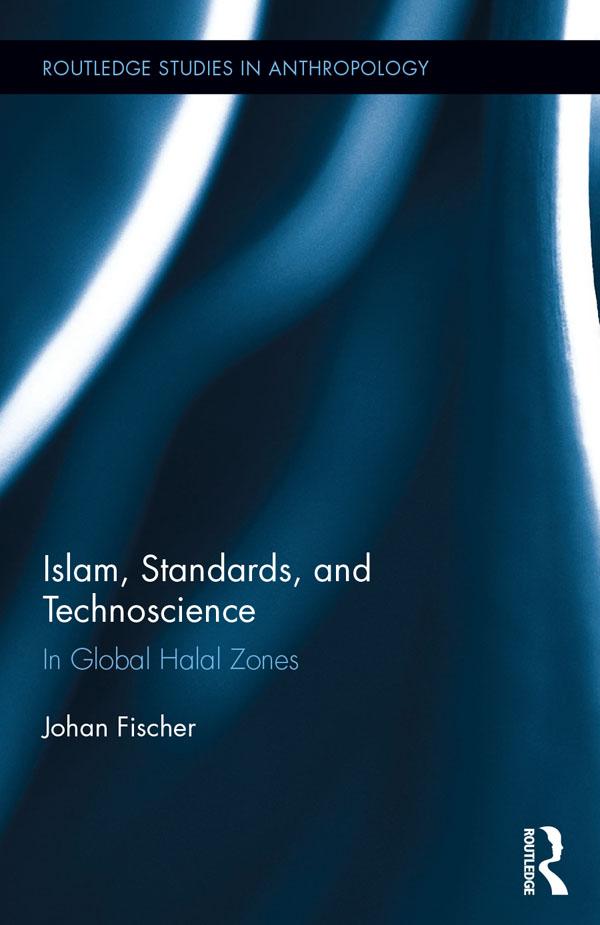
Halal (literally, "permissible" or "lawful") production, trade, and standards have become essential to state-regulated Islam and to companies in contemporary Malaysia and Singapore, giving these two countries a special position in the rapidly expanding global market for halal products: in these nations state bodies certify halal products as well as spaces (shops, factories, and restaurants) and work processes, and so consumers can find state halal-certified products from Malaysia and Singapore in shops around the world. Building on ethnographic material from Malaysia, Singapore, and Europe, this book provides an exploration of the role of halal production, trade, and standards. Fischer explains how the global markets for halal comprise divergent zones in which Islam, markets, regulatory institutions, and technoscience interact and diverge. Focusing on the "bigger institutional picture" that frames everyday halal consumption, Fischer provides a multisited ethnography of the overlapping technologies and techniques of production, trade, and standards that together warrant a product as "halal," and thereby help to format the market. Exploring global halal in networks, training, laboratories, activism, companies, shops and restaurants, this book will be an essential resource to scholars and students of social science interested in the global interface zones between religion, standards, and technoscience.
Payez facilement par carte, Klarna, Apple Pay ou Google Pay. Pas satisfait ? Vous avez toujours une garantie de remboursement de 14 jours. En savoir plus dans nos conditions. Si vous avez des questions, envoyez-nous un e-mail à hello@memmo.org.
Memmo facilite tes études, où que tu sois dans le monde. On rassemble tes manuels de cours et des outils d'étude intelligents au même endroit : résumés, quiz, podcasts et flashcards. Et il y a Ted, ton compagnon d'étude qui répond à toutes tes questions. Plus de 50 000 étudiants étudient déjà ici – conçu pour t'aider à apprendre plus vite et à moins stresser.