
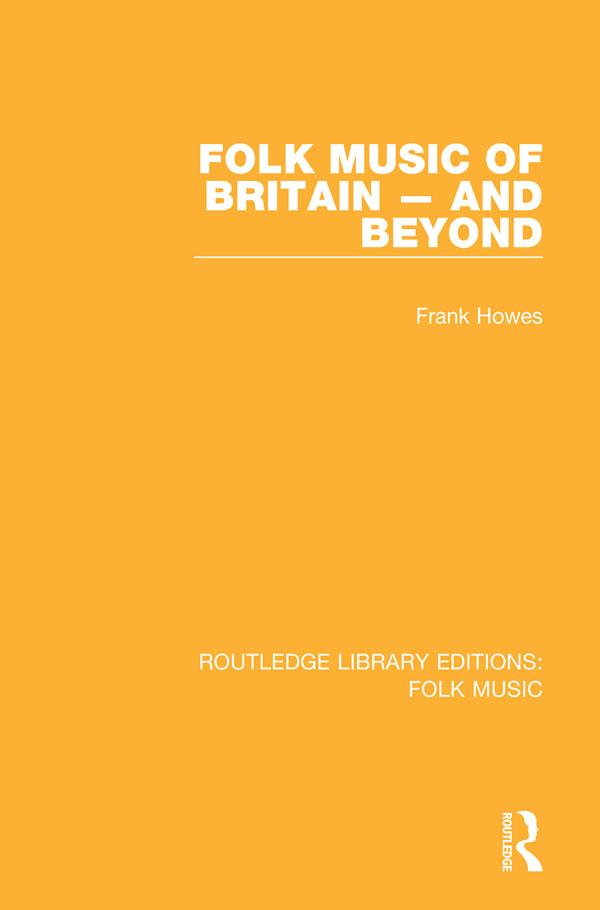
Originally published in 1969. Until the latter half of the nineteenth century, it was thought that England, alone among the European countries, and unlike Scotland and Ireland where collections of ballads and songs had already been published as early as the eighteenth century, had no important native tradition of music. The founding of the (English) Folk-Song Society in 1898, however, and the pioneering work of such collectors as Lucy Broadwood, the Reverend S. Baring-Gould and, later, Cecil Sharp uncovered a still flourishing folk culture. Since then interest in this subject has grown steadily, and the bibliography of publications of actual folk-songs and ballads is now huge. Frank Howes sets out a general and scholarly introduction, first examining in detail the history and origins of folk music and going on to show the nature and vast amount of the material, enforcing his arguments with a wealth of examples from around the world. His discussion of the differences of national idiom leads on to a comparison of British folk music with that of other European countries and America, in which he pays due attention to the Celtic and Norse traditions. Separate sections on balladry, carols, street cries, broadsides, sea shanties, nursery rhymes and instruments illustrate both the variety of folk music and the extent to which it permeates our national heritage.
Payez facilement par carte, Klarna, Apple Pay ou Google Pay. Pas satisfait ? Vous avez toujours une garantie de remboursement de 14 jours. En savoir plus dans nos conditions. Si vous avez des questions, envoyez-nous un e-mail à hello@memmo.org.
Memmo facilite tes études, où que tu sois dans le monde. On rassemble tes manuels de cours et des outils d'étude intelligents au même endroit : résumés, quiz, podcasts et flashcards. Et il y a Ted, ton compagnon d'étude qui répond à toutes tes questions. Plus de 50 000 étudiants étudient déjà ici – conçu pour t'aider à apprendre plus vite et à moins stresser.