
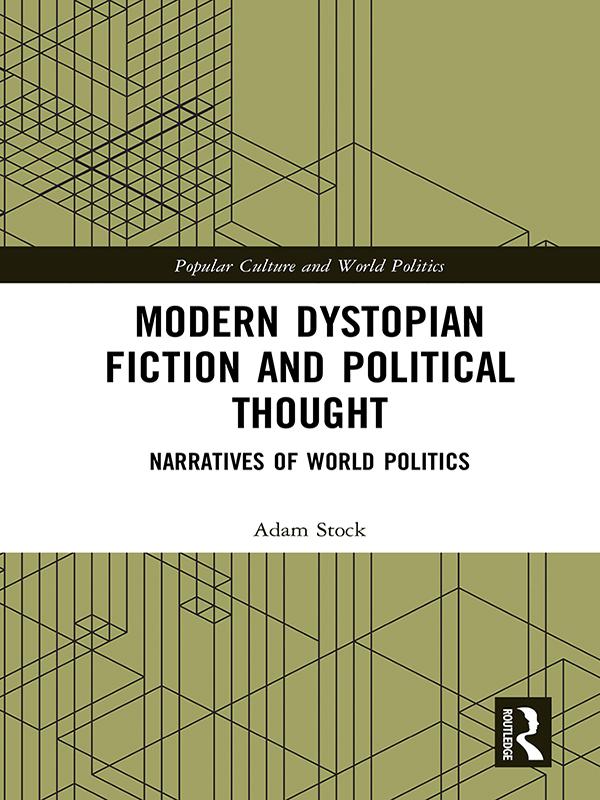
Over the past few years, ‘dystopia’ has become a word with increasing cultural currency. This volume argues that we live in dystopian times, and more specifically that a genre of fiction called "dystopia" has, above others, achieved symbolic cultural value in representing fears and anxieties about the future. As such, dystopian fictions do not merely mirror what is happening in the world: in becoming such a ready referent for discussions about such varied topics as governance, popular culture, security, structural discrimination, environmental disasters and beyond, the narrative conventions and generic tropes of dystopian fiction affect the ways in which we grapple with contemporary political problems, economic anxieties and social fears.
The volume addresses the development of the narrative methods and generic conventions of dystopian fiction as a mode of socio-political critique across the first half of the twentieth century. It examines how a series of texts from an age of political extremes contributed to political discourse and rhetoric both in its contemporary setting and in the terms in which we increasingly cast our cultural anxieties. Focusing on interactions between temporality, spatiality and narrative, the analysis unpicks how the dystopian interacts with social and political events, debates and ideas, Stock evaluates modern dystopian fiction as a historically responsive mode of political literature. He argues that amid the terrors and upheavals of the first half of the twentieth century, dystopian fiction provided a unique space for writers to engage with historical and contemporary political thought in a mode that had popular cultural appeal.
Combining literary analysis informed by critical theory and the history of political thought with archival-based historical research, this volume works to shed new light on the intersection of popular culture and world politics. It will be of interest to students and scholars in literary studies, cultural and intellectual history, politics and international relations.
Payez facilement par carte, Klarna, Apple Pay ou Google Pay. Pas satisfait ? Vous avez toujours une garantie de remboursement de 14 jours. En savoir plus dans nos conditions. Si vous avez des questions, envoyez-nous un e-mail à hello@memmo.org.
Memmo facilite tes études, où que tu sois dans le monde. On rassemble tes manuels de cours et des outils d'étude intelligents au même endroit : résumés, quiz, podcasts et flashcards. Et il y a Ted, ton compagnon d'étude qui répond à toutes tes questions. Plus de 50 000 étudiants étudient déjà ici – conçu pour t'aider à apprendre plus vite et à moins stresser.