
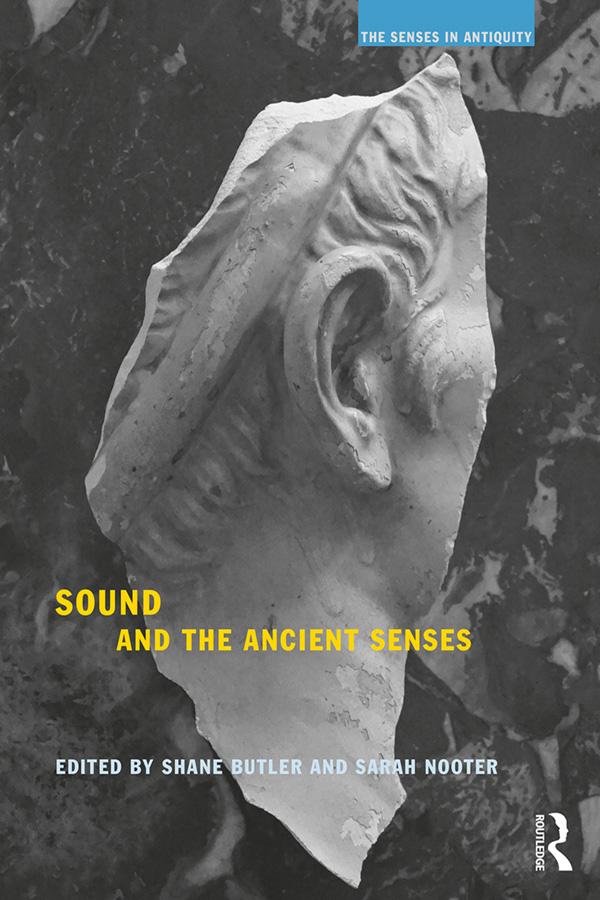
Sound leaves no ruins and no residues, even though it is experienced constantly. It is ubiquitous but fleeting. Even silence has sound, even absence resonates. Sound and the Ancient Senses aims to hear the lost sounds of antiquity, from the sounds of the human body to those of the gods, from the bathhouse to the Forum, from the chirp of a cicada to the music of the spheres.
Sound plays so great a role in shaping our environments as to make it a crucial sounding board for thinking about space and ecology, emotions and experience, mortality and the divine, orality and textuality, and the self and its connection to others. From antiquity to the present day, poets and philosophers have strained to hear the ways that sounds structure our world and identities.
This volume looks at theories and practices of hearing and producing sounds in ritual contexts, medicine, mourning, music, poetry, drama, erotics, philosophy, rhetoric, linguistics, vocality, and on the page, and shows how ancient ideas of sound still shape how and what we hear today. As the first comprehensive introduction to the soundscapes of antiquity, this volume makes a significant contribution to the burgeoning fields of sound and voice studies and is the final volume of the series, The Senses in Antiquity.
Payez facilement par carte, Klarna, Apple Pay ou Google Pay. Pas satisfait ? Vous avez toujours une garantie de remboursement de 14 jours. En savoir plus dans nos conditions. Si vous avez des questions, envoyez-nous un e-mail à hello@memmo.org.
Memmo facilite tes études, où que tu sois dans le monde. On rassemble tes manuels de cours et des outils d'étude intelligents au même endroit : résumés, quiz, podcasts et flashcards. Et il y a Ted, ton compagnon d'étude qui répond à toutes tes questions. Plus de 50 000 étudiants étudient déjà ici – conçu pour t'aider à apprendre plus vite et à moins stresser.