
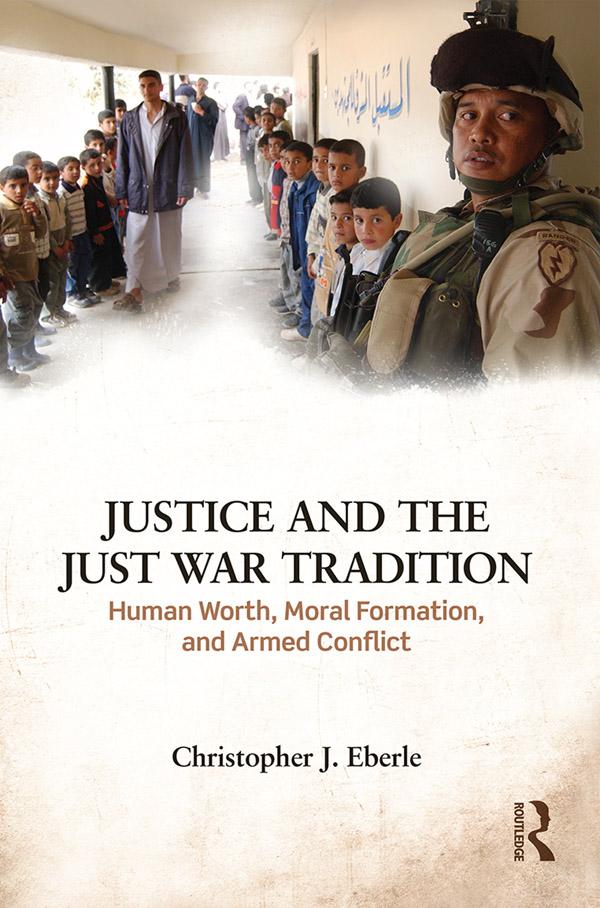
Justice and the Just War Tradition articulates a distinctive understanding of the reasons that can justify war, of the reasons that cannot justify war, and of the role that those reasons should play in the motivational and attitudinal lives of the citizens, soldiers, and statesmen who participate in war. Eberle does so by relying on a robust conception of human worth, rights, and justice. He locates this theoretical account squarely in the Just War Tradition. But his account is not merely theoretical: Justice and the Just War Tradition has a variety of practical aims, one of the most important of which is to serve as an aid to moral formation. The hope is that citizens, soldiers, and statesmen whose emotions and aspirations have been shaped by the Just War Tradition will be able to negotiate violent communal conflict in ways that respect the demands of justice. So Justice and the Just War Tradition articulates a theoretically satisfying and practically engaging account of the reasons that count in favor of war. Moreover, Eberle develops that account by engaging contemporary theorists, both philosophical and theological, by according due deference to venerable contributors to the Just War Tradition, and by integrating insights from military memoire, the history of war, and the author's experience of teaching ethics at the United States Naval Academy.
Payez facilement par carte, Klarna, Apple Pay ou Google Pay. Pas satisfait ? Vous avez toujours une garantie de remboursement de 14 jours. En savoir plus dans nos conditions. Si vous avez des questions, envoyez-nous un e-mail à hello@memmo.org.
Memmo facilite tes études, où que tu sois dans le monde. On rassemble tes manuels de cours et des outils d'étude intelligents au même endroit : résumés, quiz, podcasts et flashcards. Et il y a Ted, ton compagnon d'étude qui répond à toutes tes questions. Plus de 50 000 étudiants étudient déjà ici – conçu pour t'aider à apprendre plus vite et à moins stresser.