
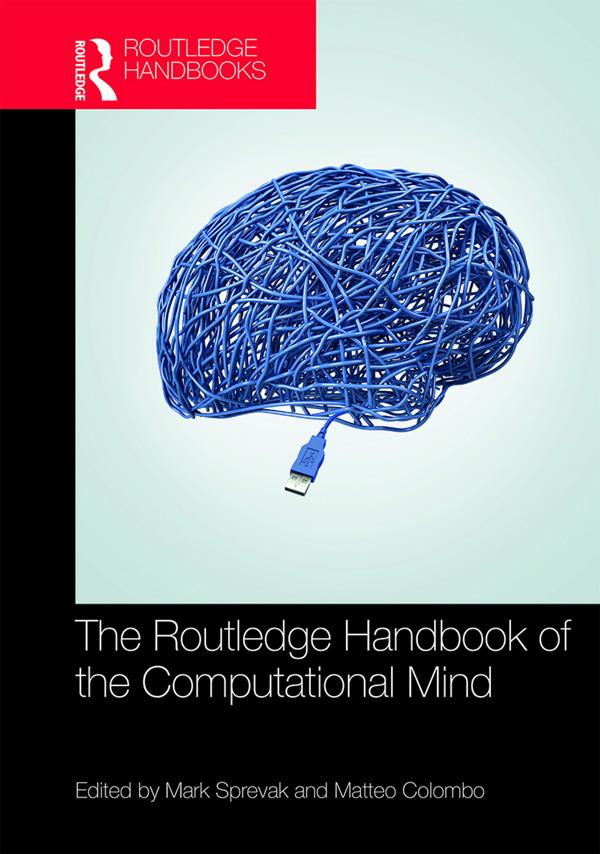
Computational approaches dominate contemporary cognitive science, promising a unified, scientific explanation of how the mind works. However, computational approaches raise major philosophical and scientific questions. In what sense is the mind computational? How do computational approaches explain perception, learning, and decision making? What kinds of challenges should computational approaches overcome to advance our understanding of mind, brain, and behaviour?
The Routledge Handbook of the Computational Mind is an outstanding overview and exploration of these issues and the first philosophical collection of its kind. Comprising thirty-five chapters by an international team of contributors from different disciplines, the Handbook is organised into four parts:
- History and future prospects of computational approaches
- Types of computational approach
- Foundations and challenges of computational approaches
- Applications to specific parts of psychology.
Essential reading for students and researchers in philosophy of mind, philosophy of psychology, and philosophy of science, The Routledge Handbook of the Computational Mind will also be of interest to those studying computational models in related subjects such as psychology, neuroscience, and computer science.
Payez facilement par carte, Klarna, Apple Pay ou Google Pay. Pas satisfait ? Vous avez toujours une garantie de remboursement de 14 jours. En savoir plus dans nos conditions. Si vous avez des questions, envoyez-nous un e-mail à hello@memmo.org.
Memmo facilite tes études, où que tu sois dans le monde. On rassemble tes manuels de cours et des outils d'étude intelligents au même endroit : résumés, quiz, podcasts et flashcards. Et il y a Ted, ton compagnon d'étude qui répond à toutes tes questions. Plus de 50 000 étudiants étudient déjà ici – conçu pour t'aider à apprendre plus vite et à moins stresser.