
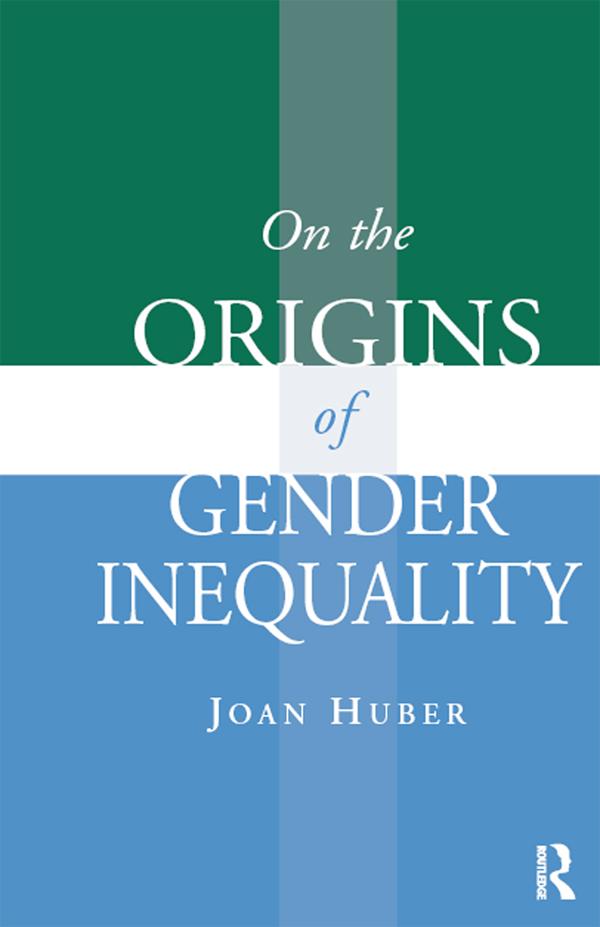
In our fast-paced world of technology and conveniences, the biological origins of women's inequality can be forgotten. This book offers a richer understanding of gender inequality by explaining a key cause-women's reproductive and lactation patterns. Until about 1900, infants nursed every fifteen minutes on average for two years because very frequent suckling prevented pregnancy. The practice evolved because it maximized infant survival. If a forager child was born before its older sibling could take part in the daily food search, the older one died. This practice persisted until the modern era because until after the discovery of the germ theory of disease, human milk was the only food certain to be unspoiled. Lactation patterns excluded women from the activities that led to political leadership. During the twentieth century the ancient mode declined and women entered the labor market en masse. Joan Huber challenges feminists toward a richer understanding of biological origins of inequality-knowledge that can help women achieve greater equality today.
Payez facilement par carte, Klarna, Apple Pay ou Google Pay. Pas satisfait ? Vous avez toujours une garantie de remboursement de 14 jours. En savoir plus dans nos conditions. Si vous avez des questions, envoyez-nous un e-mail à hello@memmo.org.
Memmo facilite tes études, où que tu sois dans le monde. On rassemble tes manuels de cours et des outils d'étude intelligents au même endroit : résumés, quiz, podcasts et flashcards. Et il y a Ted, ton compagnon d'étude qui répond à toutes tes questions. Plus de 50 000 étudiants étudient déjà ici – conçu pour t'aider à apprendre plus vite et à moins stresser.
Tu pourrais aussi aimer
Acheter le livre0