
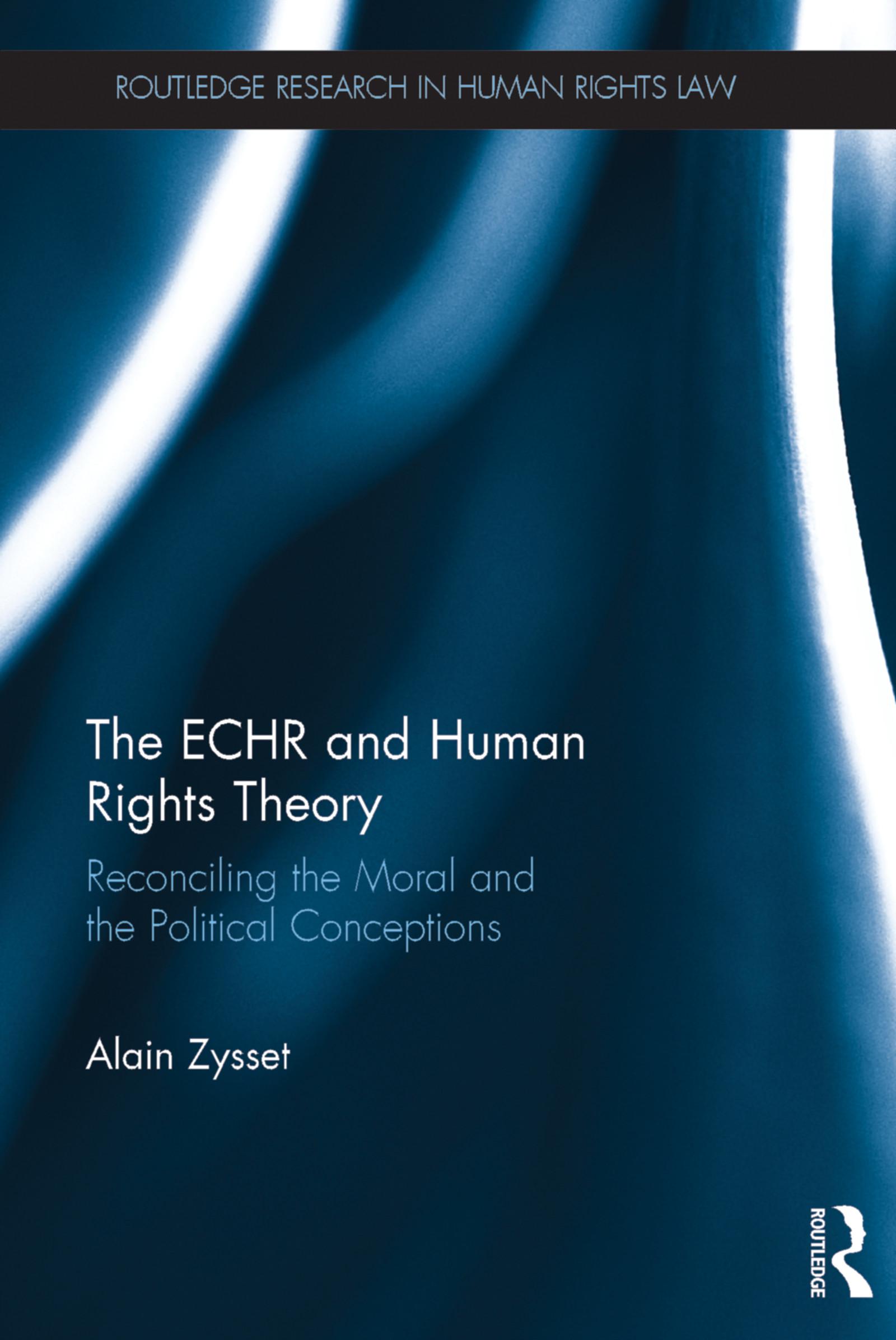
The European Convention of Human Rights (ECHR) has been relatively neglected in the field of normative human rights theory. This book aims to bridge the gap between human rights theory and the practice of the ECHR. In order to do so, it tests the two overarching approaches in human rights theory literature: the ethical and the political, against the practice of the ECHR ‘system’. The book also addresses the history of the ECHR and the European Court of Human Rights (ECtHR) as an international legal and political institution.
The book offers a democratic defence of the authority of the ECtHR. It illustrates how a conception of democracy – more specifically, the egalitarian argument for democracy developed by Thomas Christiano on the domestic level – can illuminate the reasoning of the Court, including the allocation of the margin of appreciation on a significant number of issues. Alain Zysset argues that the justification of the authority of the ECtHR – its prominent status in the domestic legal orders – reinforces the democratic process within States Parties, thereby consolidating our status as political equals in those legal and political orders.
Payez facilement par carte, Klarna, Apple Pay ou Google Pay. Pas satisfait ? Vous avez toujours une garantie de remboursement de 14 jours. En savoir plus dans nos conditions. Si vous avez des questions, envoyez-nous un e-mail à hello@memmo.org.
Memmo facilite tes études, où que tu sois dans le monde. On rassemble tes manuels de cours et des outils d'étude intelligents au même endroit : résumés, quiz, podcasts et flashcards. Et il y a Ted, ton compagnon d'étude qui répond à toutes tes questions. Plus de 50 000 étudiants étudient déjà ici – conçu pour t'aider à apprendre plus vite et à moins stresser.