
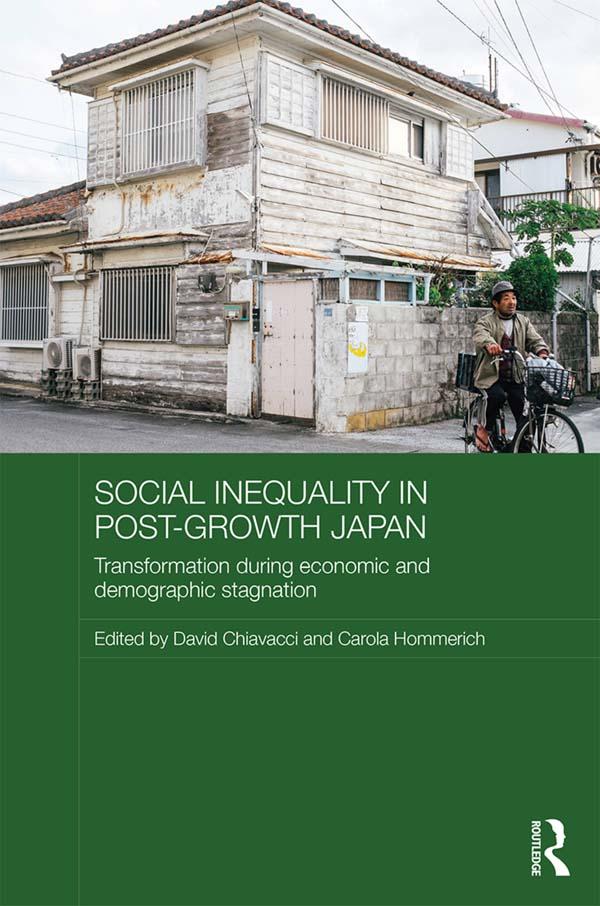
In recent decades Japan has changed from a strongly growing, economically successful nation regarded as prime example of social equality and inclusion, to a nation with a stagnating economy, a shrinking population and a very high proportion of elderly people. Within this, new forms of inequality are emerging and deepening, and a new model of Japan as 'gap society' (kakusa shakai) has become common-sense. These new forms of inequality are complex, are caused in different ways by a variety of factors, and require deep-seated reforms in order to remedy them. This book provides a comprehensive overview of inequality in contemporary Japan. It examines inequality in labour and employment, in welfare and family, in education and social mobility, in the urban-rural divide, and concerning immigration, ethnic minorities and gender. The book also considers the widespread anxiety effect of the fear of inequality; and discusses how far these developments in Japan represent a new form of social problem for the wider world.
Payez facilement par carte, Klarna, Apple Pay ou Google Pay. Pas satisfait ? Vous avez toujours une garantie de remboursement de 14 jours. En savoir plus dans nos conditions. Si vous avez des questions, envoyez-nous un e-mail à hello@memmo.org.
Memmo facilite tes études, où que tu sois dans le monde. On rassemble tes manuels de cours et des outils d'étude intelligents au même endroit : résumés, quiz, podcasts et flashcards. Et il y a Ted, ton compagnon d'étude qui répond à toutes tes questions. Plus de 50 000 étudiants étudient déjà ici – conçu pour t'aider à apprendre plus vite et à moins stresser.