
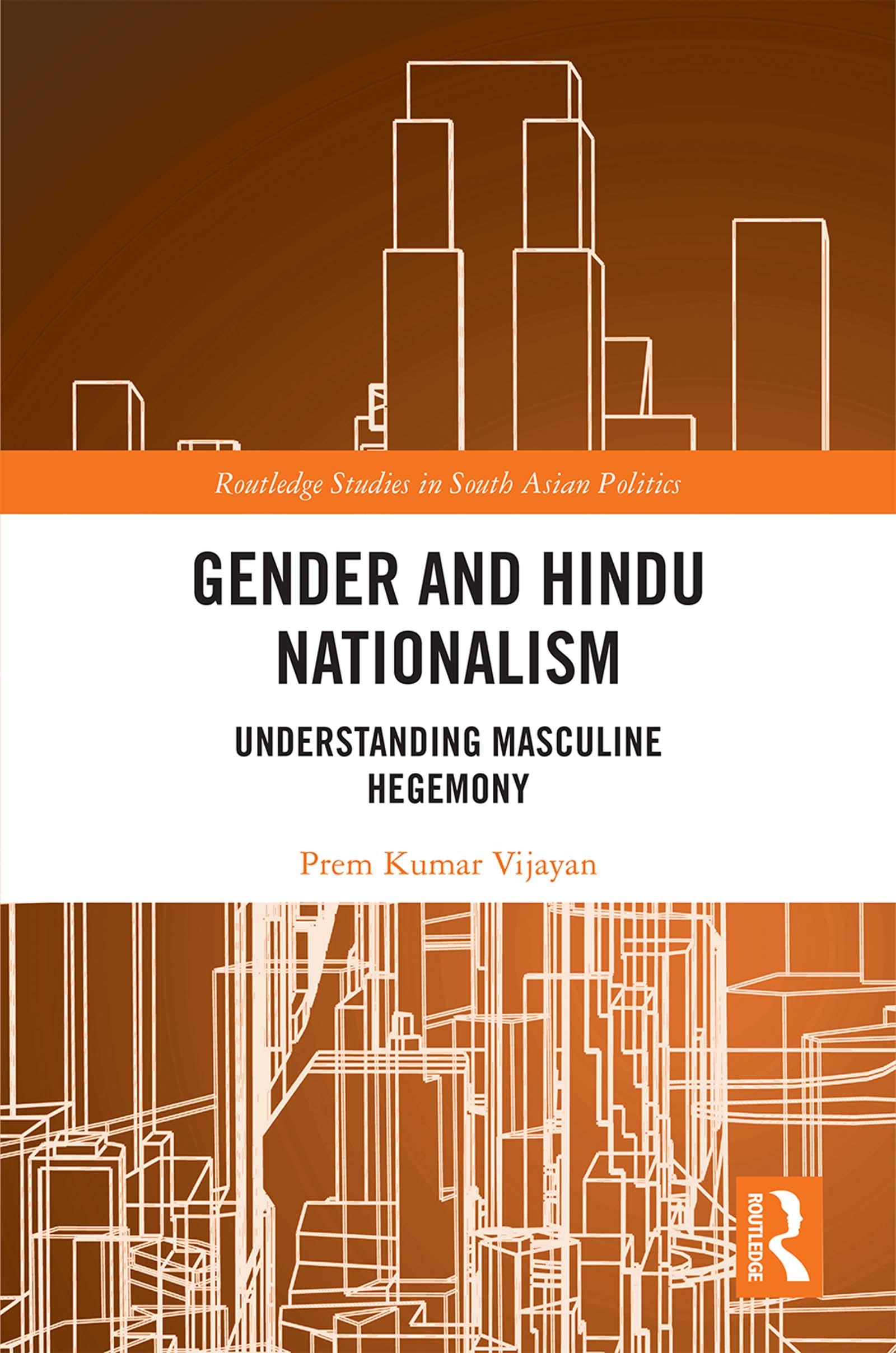
This book presents an innovative approach to gender, nationalism, and the relations between them, and analyses the broader social base of Hindu nationalist organisation to understand the growth of 'Hindutva', or Hindu nationalism, in India.
Arguing that Hindu nationalist thought and predilections emerge out of, and, in turn, feed, pre-existing gendered tendencies, the author presents the new concept of 'masculine hegemony', specifically Brahmanical masculine hegemony. The book offers a historical overview of the processes that converge in the making of the identity ‘Hindu’, in the making of the religion ‘Hinduism’, and in the shaping of the movement known as ‘Hindutva’. The impact of colonialism, social reform, and caste movements is explored, as is the role of key figures such as Mohandas Gandhi, Indira Gandhi, and Narendra Modi. The book sheds light on the close, yet uneasy, relations that Hindu nationalist thought and practice have with conceptions of 'modernity', 'development' and women's movements, and politics, and the future of Hindu nationalism in India.
A new approach to the study of Hindu nationalism, this book offers a theoretically innovative understanding of Indian history and socio-politics. It will be of interest to academics working in the field of Gender studies and Asian Studies, in particular South Asian history and politics.
Payez facilement par carte, Klarna, Apple Pay ou Google Pay. Pas satisfait ? Vous avez toujours une garantie de remboursement de 14 jours. En savoir plus dans nos conditions. Si vous avez des questions, envoyez-nous un e-mail à hello@memmo.org.
Memmo facilite tes études, où que tu sois dans le monde. On rassemble tes manuels de cours et des outils d'étude intelligents au même endroit : résumés, quiz, podcasts et flashcards. Et il y a Ted, ton compagnon d'étude qui répond à toutes tes questions. Plus de 50 000 étudiants étudient déjà ici – conçu pour t'aider à apprendre plus vite et à moins stresser.