
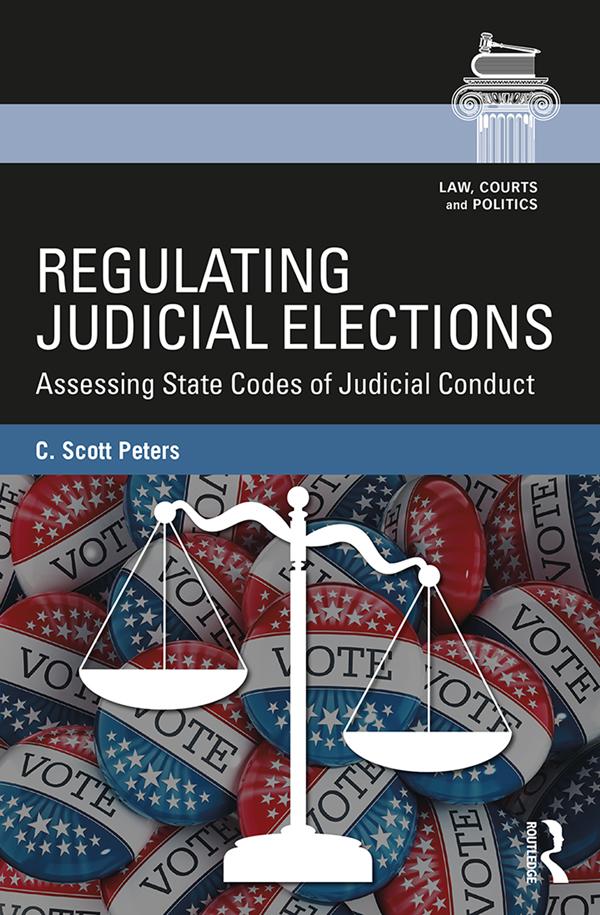
State judicial elections are governed by a unique set of rules that enforce longstanding norms of judicial independence by limiting how judicial candidates campaign. These rules have been a key part of recent debates over judicial elections and have been the subject of several U.S. Supreme Court cases.
Regulating Judicial Elections provides the first accounting of the efficacy and consequences of such rules. C. Scott Peters re-frames debates over judicial elections by shifting away from all-or-nothing claims about threats to judicial independence and focusing instead on the trade-offs inherent in our checks and balances system. In doing so, he is able to examine the costs and benefits of state ethical restrictions. Peters finds that while some parts of state codes of conduct achieve their desired goals, others may backfire and increase the politicization of judicial elections. Moreover, modest gains in the protection of independence come at the expense of the effectiveness of elections as accountability mechanisms. These empirical findings will inform ongoing normative debates about judicial elections.
Payez facilement par carte, Klarna, Apple Pay ou Google Pay. Pas satisfait ? Vous avez toujours une garantie de remboursement de 14 jours. En savoir plus dans nos conditions. Si vous avez des questions, envoyez-nous un e-mail à hello@memmo.org.
Memmo facilite tes études, où que tu sois dans le monde. On rassemble tes manuels de cours et des outils d'étude intelligents au même endroit : résumés, quiz, podcasts et flashcards. Et il y a Ted, ton compagnon d'étude qui répond à toutes tes questions. Plus de 50 000 étudiants étudient déjà ici – conçu pour t'aider à apprendre plus vite et à moins stresser.