
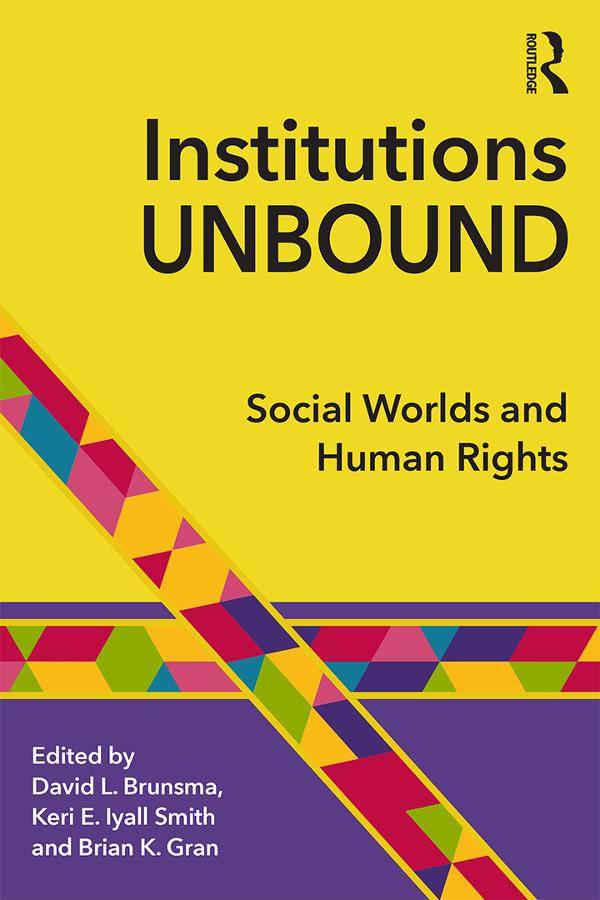
Institutions--like education, family, medicine, culture, and law--, are powerful social structures shaping how we live together. As members of society we daily express our adherence to norms and values of institutions as we consciously and unconsciously reject and challenge them. Our everyday experiences with institutions not only shape our connections with one another, they can reinforce our binding to the status quo as we struggle to produce social change. Institutions can help us do human rights. Institutions that bridge nation-states can offer resources, including norms, to advance human rights. These institutions can serve as touch stones to changing minds and confronting human rights violations. Institutions can also prevent us from doing human rights. We create institutions, but institutions can be difficult to change. Institutions can weaken, if not outright prevent, human rights establishment and implementation. To release human rights from their institutional bindings, sociologists must solve riddles of how institutions work and determine social life. This book is a step forward in identifying means by which we can loosen human rights from institutional constraints.
Payez facilement par carte, Klarna, Apple Pay ou Google Pay. Pas satisfait ? Vous avez toujours une garantie de remboursement de 14 jours. En savoir plus dans nos conditions. Si vous avez des questions, envoyez-nous un e-mail à hello@memmo.org.
Memmo facilite tes études, où que tu sois dans le monde. On rassemble tes manuels de cours et des outils d'étude intelligents au même endroit : résumés, quiz, podcasts et flashcards. Et il y a Ted, ton compagnon d'étude qui répond à toutes tes questions. Plus de 50 000 étudiants étudient déjà ici – conçu pour t'aider à apprendre plus vite et à moins stresser.